If you’re reading this, chances are you’re in the market for link fittings – or maybe you’re just tired of buying parts that snap when you need them most. As someone who’s been in the link fittings game for over a decade (yep, I started in a tiny workshop grinding metal at 19, no fancy college degree, just a lot of scrap parts and late nights), I’ve seen it all. I’ve had clients come to me after buying cheap fittings online that broke mid-install on a construction site, and I’ve had engineers send me specs so tight they make my head spin. Today, I wanna cut through the jargon and talk about what actually makes a good link fitting – because it’s not just about “looking sturdy.” Link Fittings
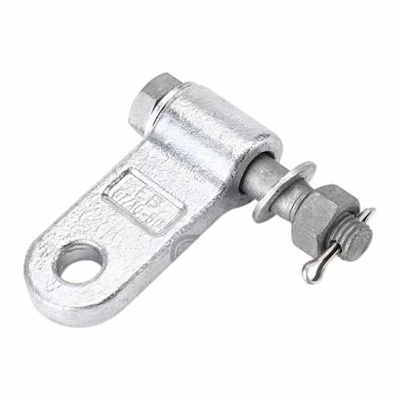
First off, let’s get one thing straight: link fittings aren’t one-size-fits-all. Whether you’re dealing with chain link for a fence, heavy-duty links for overhead cranes, or small precision fittings for bicycle chains, the rules shift, but the core quality checks stay the same. Let’s start with the big one: material. You can’t make a good link fitting out of random scrap steel. I’ve seen so many suppliers cut corners here – they’ll use recycled metal with inconsistent carbon content, or even plain iron, instead of the alloy grades that hold up under stress. For most industrial link fittings, that means low-alloy carbon steel (like 4140, if you wanna get specific) or even stainless steel for corrosive environments (think coastal areas or food processing plants). If it’s a heavy lifting application? You need heat-treated alloy steel – no exceptions. I once had a client who bought a batch of “heavy-duty” links from a no-name supplier that were made from untreated steel; they snapped during a test lift of 2,000 lbs, which is a lawsuit waiting to happen. Good suppliers like me test every batch’s material composition with a quick spark test (yep, the old-school way) and send out material test reports (MTRs) for every order – if a supplier won’t give you an MTR, run the other way.
Next, dimensional accuracy. This is the stuff that makes or breaks a fit. If your link is supposed to connect to a ½-inch chain, it can’t be 0.48 inches or 0.52 inches – even a 0.02-inch difference might mean it slips off or doesn’t seat right, which is a safety hazard. I remember a fence contractor who ordered link fittings for a 1000-foot commercial fence; the cheap ones he bought had varying inner diameters, so half the links wouldn’t snap into the chain, and he spent three days redoing the whole job. At my shop, we use CNC machines to cut and form link fittings, so every part is within 0.005 inches of spec – no guesswork. We also check every single order with calipers before it ships, not just a sample. That’s non-negotiable for me; I don’t want a client to have to deal with the headache of misfitting parts.
Then there’s the load rating. Everyone talks about it, but no one explains how it’s calculated. A lot of cheap suppliers will list a “breaking load” that’s way higher than the actual working load limit (WLL) – that’s a scam. The WLL is the amount you can safely lift or tension the link with, and it’s calculated by dividing the breaking load by a safety factor (usually 4:1 for industrial parts, sometimes higher for critical applications). If a supplier doesn’t list a WLL, or if the breaking load seems too good to be true, it probably is. I once tested a batch of links that a competitor swore could handle 5,000 lbs; when we pulled them in our test machine, they snapped at 1,800 lbs. Total garbage. At my place, we test every size of link to get the exact WLL, and we mark it clearly on every part and packaging – no fine print, no tricks. If an application needs a specific WLL, we’ll work with the client to make sure the fittings are up to it, even if it means stepping up to a heavier gauge or different material.
Surface quality is another big one that people overlook. A link fitting with deep scratches, burrs, or cracks on the surface is gonna fail faster, plain and simple. Those scratches are stress risers – when you put pressure on the link, that scratch becomes a weak point, and it breaks. I’ve had clients send back parts that looked like they were formed with a hammer and a rock, and when we tested them, they snapped at 60% of their rated WLL. Good link fittings should have a smooth, uniform surface, free of any defects. That means proper forging (or stamping, depending on the part) and finishing – either grinding, polishing, or even powder coating for extra protection. We also do a magnetic particle inspection on all heavy-duty parts to catch tiny, invisible cracks that you can’t see with the naked eye. It’s a bit extra work, but it’s worth it to know our parts won’t let someone down.
Durability in harsh environments – that’s where a lot of suppliers skimp too. If the link fitting is gonna be outside in the rain, or in a factory with chemicals, it needs to stand up to that. Carbon steel will rust if you don’t treat it, so hot-dip galvanizing is the standard for outdoor parts – it’s not just a coat of paint, it’s a thick layer of zinc that bonds to the steel and prevents corrosion. For even harsher environments, like saltwater docks, 316 stainless steel is the way to go – it’s more expensive, but it won’t corrode even after years in salt air. I had a client who installed cheap galvanized links on a marina fence; after one season, they were covered in rust and the links were starting to weaken. When he switched to my 316 stainless fittings, they’ve been fine for five years now. The trick here is matching the coating and material to the environment – don’t use regular galvanized steel in a salt marsh, and don’t use uncoated steel in a rainy climate.
Wait, let’s not forget about traceability. If something goes wrong with a link fitting, you need to be able to track it back to the batch it came from. Good suppliers keep detailed records: who made the steel, what the heat number was, when it was forged, tested, and shipped. That way, if a client has a failure, we can pull up the specs, re-test the batch, and figure out what happened – or issue a replacement no questions asked. A lot of cut-rate suppliers don’t keep these records, so if a part fails, you’re stuck. At my shop, every link fitting has a batch number stamped on it, and we keep those records for 10 years – that’s peace of mind for my clients.
Now, I know what some of you are thinking: “This all sounds great, but it’s gonna cost a fortune, right?” Yeah, good link fittings aren’t as cheap as the ones you find on Amazon for $20 for a pack of 50. But think about it: if a cheap link snaps while you’re lifting a 2,000 lb load, that’s not just a broken part – that’s damaged equipment, downtime, maybe even injury. I’ve had a construction client tell me that when they used my fittings, they had zero related issues, and their insurance rates went down because of it. The cheap ones ended up costing them twice as much in replacements and lost work. Quality pays off in the long run, no question.
At the end of the day, when you’re shopping for link fittings, don’t just look at the price. Ask for material test reports, check dimensional specs, confirm the working load limit, ask about surface quality and testing, and make sure the supplier can back up their parts with traceability. If a supplier hesitates on any of that, walk away. I’m not here to brag, but I stand behind every part we make. We don’t cut corners, we test every batch, and we work with our clients to make sure they get exactly what they need – whether it’s a few link fittings for a small fence or thousands for a big industrial project.
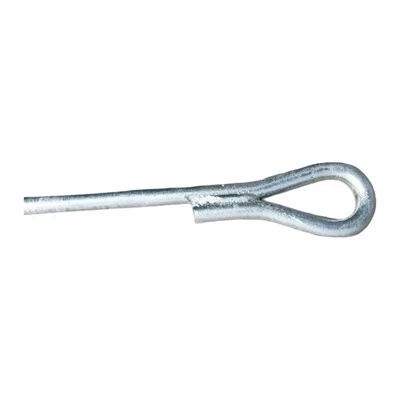
If you’re tired of dealing with link fittings that let you down, hit me up. Let’s talk about your project, what you need, and make sure you get parts that are reliable, safe, and built to last. No sales pitch, no confusing jargon – just straight talk about link fittings that work when you need them.
References
Protective Fittings ASTM A572/A572M, Standard Specification for High-Strength Low-Alloy Columbium-Vanadium Structural Steel
OSHA 1910.184, Slinging, Rigging, and Material Handling
ISO 9001:2015, Quality Management Systems – Requirements
ASTM A143/A143M, Standard Practice for Safeguarding Against Embrittlement of Hot-Dip Galvanized Structural Steel Products and Procedure for Detecting Embrittlement
Hebei Tongchuang Power Fittings Co., Ltd.
With abundant experience, we are one of the most professional link fittings manufacturers and suppliers in China. Please feel free to buy advanced link fittings for sale here from our factory. Good service and quality products are available.
Address: Houxiaohan Industrial Zone, Xingbieying Town, Hejian City, Hebei Province, P.R. China
E-mail: tongchuangepf@gmail.com
WebSite: https://www.tongchuangpower.com/
