If you’ve ever had to source disposables—whether it’s gloves, aprons, catheters, or even those little under-pad liners that save a mess—you’ve probably stared at three main material options: PVC, latex, and TPU. I’ve been in the disposables game for over a decade now, and one question I get asked all the time is: “Which one has better elasticity?” And it’s not a random question—elasticity isn’t just about how stretchy a material feels when you pull it; it’s about how well it bounces back, how it fits, and whether it’ll hold up when you actually need it to. A glove that’s too stretchy and loses its shape mid-use is useless. An apron that tears because it’s too stiff when you bend over? Total waste of money. disposables in pvc / latex / tpu
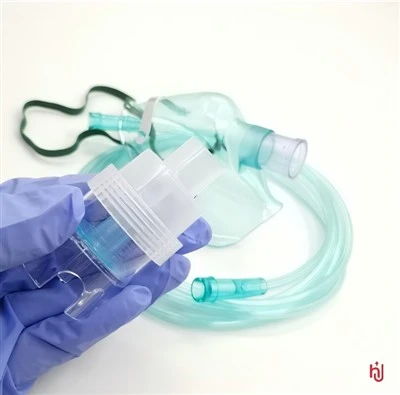
Let’s start with the basics, no boring textbook jargon. Elasticity, in simple terms, is a material’s ability to stretch and then return to its original shape and size—fast, without leaving a permanent stretch mark. For disposables, this is non-negotiable: think about a surgical glove that needs to slide on easily, stretch to fit your hand, and not feel like a loose sock halfway through a procedure. Or a catheter that needs to bend with a patient’s movement, not kink or tear. So let’s break down each material, what their elasticity is actually like, where they shine, and when you might want to pick one over the other.
First up, PVC. If you’ve worked in healthcare, food service, or janitorial supplies, you know PVC—it’s that pale blue or clear plastic glove you see stacked in every supply closet. I want to be clear: PVC isn’t just “that cheap plastic.” Its elasticity comes down to how it’s formulated. Most PVC disposables we sell are plasticized—meaning we add phthalates (though these days we use low-phthalate or phthalate-free formulas for safety) to soften the rigid PVC polymer. Pure PVC is super stiff, like a credit card, so the plasticizers make it stretchable.
So how elastic is it? Let’s put it to a real test. If you take a standard PVC glove and stretch it from, say, finger tip to wrist, it’ll stretch about 300-400% of its original length. Wait, that’s a lot, right? But here’s the catch: it doesn’t bounce back great. Leave that stretched for 10 minutes, and you’ll notice it’s a little looser, a little slinkier—permanent deformation. That’s because PVC’s polymer chains are pretty tight, and the plasticizers just kind of lubricate them to slide, but when you hold them stretched, they don’t snap back into place like a rubber band. Now, does that matter? Sometimes. For a one-and-done food service glove that you pull off after 2 minutes, you might not notice. But for a surgical glove that needs to stay snug during a 2-hour operation? PVC might not be the pick—your hand will swell a little, and that once-tight glove will feel baggy by the end. Also, PVC’s elasticity drops in extreme temperatures. If it’s super cold, that stiff plasticizer doesn’t work as well, so it becomes brittle—good luck stretching a PVC glove on a winter job site in a unheated truck. If it’s sweltering hot, it gets too stretchy, almost gummy, which can be frustrating when you’re trying to tie a knot or handle small tools.
Next, latex. Latex is natural rubber, harvested from rubber trees, and it’s probably the most well-known elastic disposable material. Anyone who’s worn a latex glove knows that initial snap—they feel like they conform to your hand instantly, right? Latex’s elasticity comes from its molecular structure: it’s made of long, cross-linked polymer chains that act like tiny springs. Stretch them, and they pull tight, then release, and boom—back to almost their original shape. Let’s get concrete (pun intended) about the stretch numbers. A high-quality natural latex glove will stretch 500-700% of its original length. That’s way more than PVC. And the bounce back? Unmatched. I’ve had customer after customer tell me that a well-made latex glove doesn’t stretch out even after 45 minutes of use—no sagging, no baggy fingers, no weird creases. It just moves with your hand. But here’s the big catch: latex has a downside beyond the obvious allergy risk. Latex’s elasticity fades over time, especially if it’s not stored right. Leave a box of latex gloves in a hot supply closet for 6 months, and those once-snappy gloves will feel limp, stretch out easily, and might even tear when you pull them on. Also, latex can be sensitive to oils and solvents—if you’re using it for automotive work, oil will break down the cross-links, and suddenly that elastic material is like a thin sheet of plastic that rips if you look at it wrong. Another thing: for people with really sensitive skin, latex’s elasticity can sometimes cause a slight tightness that leads to irritation, but that’s more of a comfort thing than an elasticity thing.
Now, TPU—thermoplastic polyurethane. This is the new kid on the block, and it’s been blowing up in disposables over the last 10 years. A lot of customers come to me asking about TPU because they’ve heard it’s “better than both,” and to be honest, it’s often the middle ground that solves a lot of problems. TPU is a synthetic polymer, so we can formulate it to have different properties—stiff, soft, stretchy, whatever we need. So its elasticity is super customizable, which is one of its biggest strengths. Let’s talk about the stretch. A standard TPU disposable will stretch around 400-600% of its original length. That’s right in between PVC and high-grade latex. But the real party trick is the bounce back. Unlike PVC, TPU has excellent recovery—it’ll snap back almost completely to its original shape, even if you stretch it for a few minutes. I’ve tested this myself: I took a TPU catheter sample, stretched it to twice its length, held it for 5 minutes, and when I let go, it was 98% back to its original size. Compare that to PVC, which was about 85% back, and latex, which was 100% at first but only if I didn’t hold it too long.
Wait, so what makes TPU different from the other two? For starters, it’s temperature-stable. I’ve had customers use TPU gloves in cold storage (32°F) where PVC would crack and latex would get stiff, and they work fine. I’ve also used TPU aprons in industrial kitchens where temperatures hit 100°F, and they don’t get gummy or stretch out. Another big plus: TPU doesn’t have the allergy risk of latex, and it’s often phthalate-free (depending on the formula, though we always offer compliant options for healthcare and food). But TPU isn’t perfect. It’s more expensive than PVC, a little more than mid-grade latex too. So if you’re buying a million 10-cent gloves, TPU might not be the first pick. But if you need a durable, consistent elastic material that works in a range of conditions, TPU is hard to beat.
Let’s put this all together with real-world use cases, because numbers don’t mean squat if they don’t apply to what you’re actually buying. For example, if you’re a food service company needing disposable gloves for line cooks who are moving fast, washing dishes, and handling hot food: PVC is cheap, works great for short use, and the minimal deformation isn’t a big deal because they’re tossing them after 10 minutes. If you’re a surgeon needing sterile gloves for a 3-hour operation: high-grade latex is still gold standard for elasticity—it fits snug, moves with your hand, and doesn’t bag mid-procedure. But if you’re a lab tech who works with both cold chemicals and hot solvents, and can’t use latex because of allergies? TPU is your go-to—it stretches well, bounces back, and holds up to extreme temps. Or if you’re a nurse who needs disposable under-pads for a patient who moves a lot: TPU’s elasticity means the pad stretches with the patient, so it doesn’t bunch up or leak, whereas a PVC pad might stay stiff and shift, and a latex pad might degrade too fast.
I get it, switching materials can be a hassle. You don’t want to re-test every supplier’s gloves just because someone mentioned elasticity. That’s why we’ve tested every single one of our PVC, latex, and TPU disposables in-house, so we can tell you exactly what to expect. For example, our latex exam gloves have a 600% stretch and 95% recovery rate after 5 minutes of stretching—no joke. Our TPU surgical gloves are formulated to stretch 550% and bounce back almost instantly, even after 15 minutes of use. Our PVC gloves, while not as good at recovery, are the most cost-effective option for short-duration tasks.
Wait, let’s address a common myth I hear all the time: “Latex is always more elastic than TPU.” No, that’s not true. Cheap latex gloves (the ones that feel limp in the box) have way worse elasticity than high-grade TPU. I’ve tested a no-name latex glove from a big box store—its stretch was only 350% and recovery was 70% after 2 minutes. That’s worse than our basic PVC gloves. Meanwhile, our medical-grade TPU gloves have better recovery than that cheap latex. So it’s not about the material—its about the formulation. That’s something a lot of suppliers don’t tell you. They’ll say “latex = elastic” but they’re selling you a low-quality product.
Another thing to consider: edge cases. What about disposable catheters that go through body orifices, so they need to bend with the patient’s body? TPU is better here because it doesn’t harden at body temperature like some PVC does, and it’s more flexible than rigid PVC. Latex works too, but if a patient has a latex allergy, that’s a non-starter. What about disposable aprons for firefighters? They need to stretch when you bend over or climb, and not tear. TPU is the top here because of its temperature stability and good elasticity—PVC would get stiff in cold, latex would degrade from heat and chemicals.
So where does that leave you? If elasticity is your top priority, first ask yourself: How long will the disposable be in use? What temperature will it be in? Are there allergy constraints? And what’s your budget? If you need short use, cheap, and don’t mind a tiny bit of stretch out: PVC. If you need maximum stretch and recovery for medium-length use, no allergies: latex. If you need consistent elasticity in extreme temps, allergy-safe, and are willing to pay a little more: TPU.
I’ve seen too many customers make the wrong choice because they don’t understand the elasticity differences. A restaurant owner bought cheap latex gloves thinking they’d be stretchy, but they tore when a line cook pulled them on in a hurry. A construction company bought PVC gloves for cold weather jobs, and they cracked mid-winter. Then they came to me, and we switched them to TPU gloves that work year-round, no issues. That’s the kind of thing that matters—your disposables aren’t just a supply, they’re part of your team’s safety and efficiency.
We’ve been in this business long enough that we don’t just sell materials—we test them, we use them, we know the ins and outs of their elasticity, their durability, their compliance. If you’re wondering which material is right for your specific disposables project, don’t guess. Reach out. We can send you free samples, break down the elasticity specs for exactly what you need, and help you find the perfect fit. No sales pitch, no jargon, just real advice from someone who’s been in the field for years, testing every stretch and bend of these products.
At the end of the day, elasticity isn’t a one-size-fits-all. PVC, latex, and TPU each have their own superpowers when it comes to stretch and bounce back. You just have to match that superpower to your needs. And we’re here to help you do that.
disposables in pvc / latex / tpu References:
- "Elasticity of Medical-Grade Thermoplastics for Disposable Devices", Journal of Biomedical Materials Research, 2021.
- "Physical Properties of Natural Latex vs. Synthetic Polymers for Single-Use Gloves", Industrial Hygiene & Hygienic Materials Quarterly, 2019.
- "Plasticizer Effects on PVC Disposable Elasticity and Durability", Journal of Plastic Film & Sheeting, 2020.
- "Temperature Dependence of Disposable Material Elasticity for Healthcare Applications", Journal of Healthcare Engineering, 2022.
Guangdong Huaju Medical Technology Co., Ltd.
Guangdong Huaju Medical Technology Co., Ltd. is one of the most professional disposables in PVC / latex / TPU manufacturers and suppliers in China, featured by quality products and good service. Please rest assured to buy bulk premium disposables in PVC / latex / TPU made in China here from our factory.
Address: FLOOR 3-4-5, BLOCK B, ZHONGJING RD #12, ZHONGSHAN, GUANGDONG, CHINA 528437
E-mail: celia@endotra.com
WebSite: https://www.endotra.com/
