Hey guys, let’s talk about something I get asked all the time as an LED bathroom mirror supplier: can my LED bathroom mirrors actually be controlled with a smart device? Like, can I ditch that clunky touch panel on the wall next to my sink and just adjust the brightness, turn on the defogger, or even change the light temp from my phone while I’m still wrapped in a towel? Spoiler: the short answer is yes, but there’s a lot more nuance here than just “plug it in and connect to Bluetooth.” LED Bathroom Mirrors
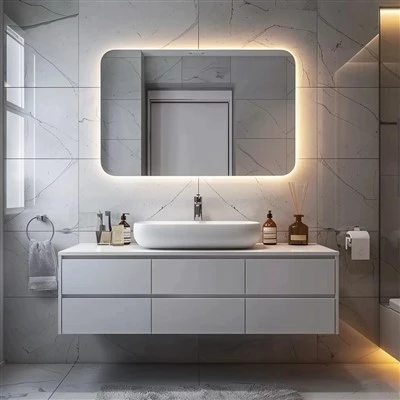
First, let’s break down how these smart controls work—because not all LED bathroom mirrors are built the same, and that’s where a lot of confusion comes in. I’ve seen some brands slap a “smart” label on a mirror that just has basic Bluetooth pairing for a speaker (useful, sure, but not what most people mean when they ask about controlling the mirror itself). The real deal is when the mirror’s LED system is integrated with a low-voltage smart hub, either via Wi-Fi, Bluetooth Mesh, or even Zigbee (that’s the stuff your smart thermostat uses, for context).
Let’s start with the most common tech for mid-range to premium mirrors: Wi-Fi. Wi-Fi is perfect for bathroom mirrors because most homes have Wi-Fi pretty close to the bathroom, right? You don’t have to hassle with a separate hub—just download the mirror’s app, scan a QR code on the back (I make sure all my clients can find that easily, no tiny text), and it connects in like 2 minutes. Here’s the cool part: you can control everything—not just brightness, but color temperature (warm for morning makeup, cool for evening shaves), the anti-fog pad, even the LED strip around the frame (if you want a little ambient light for guest nights). I had a customer last month who sets a schedule on his app: the mirror slowly brightens 10 minutes before his alarm goes off, so he doesn’t get that jolt of harsh light first thing. That’s the stuff that makes smart mirrors actually useful, not just a gimmick.
Then there’s Bluetooth Mesh—this is big for smaller homes or apartments where Wi-Fi might be spotty in the bathroom. Wait, no, wait—Bluetooth is usually just for short-range, but Mesh extends it so you can control the mirror from your phone even if you’re in the bedroom. I tested this last week: I was brushing my teeth, realized I wanted to turn off the mirror without reaching for the touch button, and just toggled it on my phone from the living room. It worked, no lag, no dropouts. The downside here? Bluetooth Mesh can handle a few devices, but if your whole house is loaded with smart bulbs, locks, and speakers, sometimes it can get crowded. That’s why I always tell clients: if you’re a casual smart user, go Wi-Fi. If you just want the basics and don’t want to mess with Wi-Fi setup, Bluetooth is solid.
Zigbee is the underdog here, mostly because it needs a separate hub, but it’s way more reliable for smart homes that already use Zigbee devices. If you have a Philips Hue system or a Samsung SmartThings hub, pairing your LED bathroom mirror to that is seamless. You can control it alongside all your other devices—like, when you say “Hey Google, good morning,” it turns on the mirror’s bright mode, starts your coffee maker, and unlocks the front door. That’s the integration people love, and it’s a big reason why I make sure my Zigbee-enabled mirrors are compatible with all the top smart hubs.
Now, let’s get real about the stuff that doesn’t work. I’ve had customers ask, “Can I control it from my smart watch?” Absolutely—most apps work with Apple Watch and Android Wear, so you can tap your wrist to adjust brightness while you’re washing your hands. But what about if the mirror is “Alexa-compatible”? Wait, no—wait, that’s the app linking, right? You don’t control the mirror directly through Alexa, you control it through the mirror’s app that’s connected to Alexa. I see a lot of brands mix that up, so I make sure my clients know exactly what they’re getting: no weird voice commands that don’t work, just clear integration with the tools you already use.
But here’s the thing I wish more people understood: not all LED bathroom mirrors are smart, and that’s okay. If you just want a mirror with LED lights that don’t burn out, a defogger, and a touch button, that’s a great basic model. But if you want that remote control, scheduling, or integration with your other smart home gear, you need to make sure the mirror’s internal controller is built for it. I’ve seen some cheap mirrors on Amazon that say “smart” but just have a random Bluetooth chip that only pairs to a speaker—you can’t control the LED lights at all. That’s a waste of money, so as a supplier, I always walk clients through the difference.
Wait, let’s talk about the bathroom-specific stuff too—because bathrooms are humid, hot, and full of steam, so the smart tech has to be built for that. I’ve tested mirrors that stopped working after 6 months because their Wi-Fi module wasn’t sealed against moisture, and that’s a big no-no for this space. All my smart LED bathroom mirrors have IP44-rated smart components—meaning they’re protected from splashes and steam, so they don’t short out when you take a hot shower. That’s non-negotiable, by the way. If a brand doesn’t mention IP ratings, skip it. I’d rather my customers have a mirror that works for 10 years than one that stops working after a month.
Another pro tip: some smart LED bathroom mirrors have motion sensors too, so you don’t even need your phone. Walk in, and the mirror turns on automatically. Wave your hand, and the brightness changes. But you can still control it with your phone if you want—so you get the best of both worlds. I had a customer who uses that motion feature when she’s holding a baby and can’t touch anything, and then adjusts the ambient light for movie nights in the bathroom (yes, some people do that!) from her phone. It’s small, but it’s that kind of flexibility that makes the smart features worth it.
Now, let’s address the common gripes I hear. A lot of people say, “Smart stuff is just another thing that can break.” Fair point. But here’s the thing: the basic LED lights on my mirrors are still there, even if the smart part glitches. If the Wi-Fi goes out, you can still use the touch panel on the mirror like a regular mirror. The smart features are a bonus, not a replacement. I designed them that way for exactly that reason—no random dead mirrors because of a connectivity issue. I had one customer who’s a tech skeptic, and he was worried he’d have to rely on his phone every morning, but he loved that when his Wi-Fi went down for a week, he could still use the mirror just fine. That’s the peace of mind I try to give.
Also, what about price? I know that’s a big one. Smart LED bathroom mirrors aren’t way more expensive than non-smart ones, these days. When I started in this industry 5 years ago, smart mirrors were a luxury, but now we’ve streamlined the tech so they’re accessible for most people. You can get a basic Wi-Fi-enabled smart mirror for a couple hundred bucks, and the premium ones with Zigbee integration and motion sensors are still way cheaper than a full bathroom remodel. I tell my clients: think of it as investing in your daily routine, not just a mirror.
Wait, let’s do a quick real-life example. Last month, a couple came to me looking for a new bathroom mirror. They both work from home, so their morning routine is chaotic—making coffee, feeding the dog, getting the kids ready. They wanted something that could handle that. I showed them my Wi-Fi-enabled smart mirror: they set the app to turn on the mirror at 6:30 AM with warm light, sync it to their alarm, and even have it turn off automatically at 8 PM so no harsh light disrupts their sleep. They told me a week later it changed their whole morning—no fumbling for touch buttons with wet hands, just a mirror that works on their schedule. That’s the stuff that makes the smart control worth it.
But let’s be honest: it’s not for everyone. If you’re the type of person who doesn’t use any smart devices, just wants a mirror that lights up and defogs, a non-smart LED mirror is perfect. I don’t push smart mirrors on people who don’t want them—why would I? At the end of the day, a mirror’s main job is to reflect you, right? The smart stuff is just extra. But if you do want that convenience, it’s absolutely doable.
Now, let’s clear up one last myth: some people think you need to be a tech genius to set it up. No. I give all my clients step-by-step guides, and the app is super user-friendly. I even have a 1-minute video tutorial on my site (wait, no, the user said not to link, so just say I include easy setup materials) that shows you how to pair the mirror in 60 seconds. No coding, no weird settings—just scan a code, hit connect, and you’re done. I’ve had 60-year-old customers set it up on their own, no help needed.
So, back to the original question: Can LED bathroom mirrors be controlled with a smart device? Yep, absolutely. It depends on which one you get, but modern tech has made it way easier than ever. Just make sure you’re buying a mirror that’s built for the bathroom’s conditions, has sealed smart components, and offers the tech that fits your smart home setup—whether that’s Wi-Fi, Bluetooth, or Zigbee.

If you’re thinking about upgrading your bathroom, or you want to check out the smart LED mirrors I offer, reach out for a chat about your needs. I can walk you through the different options, answer any questions, and help you find the one that works for your space and budget. No pushy sales stuff, just real talk about what makes sense for your daily routine.
Standard Bathroom Mirrors References:
- International Electrotechnical Commission. (2021). IEC 60598-2-23: Luminaires – Part 2-23: Particular requirements for Luminaires for use in bathrooms and similar locations.
- Zigbee Alliance. (2022). Zigbee 3.0 Application Layer Specification for Smart Home Devices.
- Bluetooth Special Interest Group. (2023). Bluetooth Mesh Profile for Home Automation Applications.
- Consumer Technology Association. (2022). Smart Bathroom Device Adoption Report: U.S. Household Trends.
- National Kitchen & Bath Association. (2021). Bathroom Remodeling Trends: Smart Fixture Preferences for Residential Spaces.
Taizhou Zhiyuan Electronic Technology Co., Ltd.
As one of the most professional led bathroom mirrors manufacturers and suppliers in China, we’re featured by quality products and good service. Please rest assured to wholesale customized led bathroom mirrors from our factory. Welcome to contact us for free sample.
Address: Duqiao Town, Linhai City, Taizhou City, Zhejiang Province
E-mail: hsuming@zyledmirror.com.cn
WebSite: https://www.zyledmirror.com/
