Hey there, thanks for stopping by. If you’ve ever spent time on our porch or backyard, you know a pergola isn’t just a structure—it’s where morning coffee turns into chat nights, where kids (or nieces, nephews, fur babies) run around, and where we all slow down a little. But here’s the thing I’ve been thinking about lately: what if one of your guests, or even a family member, has a disability that makes getting that pergola feel like a hassle? It’s not just about checking a box for accessibility—it’s about making sure everyone can enjoy that spot, right? As the guy who runs our pergola supply team, I’ve talked to dozens of folks over the last year who’ve said, “I love this design, but I can’t use it because…” and whatever that “because” is, it stuck with me. Today, I’m breaking down exactly how to make a pergola more accessible, from small tweaks that don’t break the bank to bigger upgrades worth investing in. Let’s dive in—no jargon, just real talk from someone who’s been in this game too long. Pergola
First off, let’s get one thing straight: accessibility isn’t one-size-fits-all. A 60-year-old with knee issues, a teen in a wheelchair, someone with autism who’s overwhelmed by bright sunlight and loud echoes, and a parent with a stroller all have different needs. I’ve seen a pergola that looked perfect on paper be useless for a guy in a powerchair because the path to it was gravel and a 3-inch step. Don’t make that mistake. Start by walking through the space as if you were the person who needs the most help. Grab a cane, sit in a wheelchair, wear noise-canceling headphones, or bring a stroller and try to get from your back door to the pergola. I did this last month when my cousin—who uses a manual wheelchair for a spinal cord injury—came over. I thought our path was fine until I hit a loose paver that made his front wheel slide. Oops. That’s the kind of small, easy-to-miss thing we’re targeting first.
Let’s start with the basics: getting to the pergola. If the pathway from your home’s entrance to the pergola isn’t accessible, none of the other upgrades matter. Most people focus on the pergola itself, but the approach is 50% of the battle. First, width. ADA (and most accessibility guidelines) say a clear path needs to be at least 36 inches wide. That’s enough for a wheelchair, a stroller, and a friend to walk side by side without squeezing. I’ve seen paths that are 30 inches wide—way too tight for a powerchair, which is almost 28 inches across plus turning space. Speaking of turning space: if the path is less than 60 inches wide for a 180-degree turn, a wheelchair user might have to back up all the way to the house, which is a pain. So make sure the main path is 36 inches minimum, and add a turning area every 10 feet or so if it’s a long path.
Next, surface. No gravel, no mulch, no uneven dirt. Those are trip hazards for anyone, but especially for wheelchairs or people with mobility aids. We recommend smooth, non-slip surfaces: concrete that’s finished to be grip-ey, interlocking pavers with no gaps bigger than a quarter (that’s a big one—gaps wider than that can catch wheelchair wheels or crutch tips), or compacted crushed stone that’s packed super tight (but only if it’s smooth, not chunky). If there’s a step up or down to the pergola area, skip the step entirely if possible—level ground is best. If you can’t avoid a step, a ramp is non-negotiable. The slope of the ramp should be 1:12—meaning for every 1 inch of height, you need 1 foot of ramp. So a 6-inch step needs a 6-foot ramp. And don’t forget handrails on both sides of the ramp, at two heights: 34 inches for standing folks, 28 inches for wheelchair users who might reach for it from their seat. I’ve heard too many horror stories of ramps that were too steep, no handrails, or way too narrow. Avoid that.
Now, the pergola itself. This is the fun part—we don’t have to make it look like a hospital wing. We can keep that open, airy feel that makes pergolas great, while adding accessibility features that actually work. First, entry. The main opening of the pergola shouldn’t be blocked by posts or beams that stick out. If your pergola is 8 feet wide, the entry should be at least 5 feet wide clear—no posts in the way. For wheelchairs, that’s enough to roll right through without turning sideways. Also, if you have climbing vines or hanging planters near the entry, make sure they’re not too low—someone walking with a cane or in a wheelchair might hit their head. I had a customer last year who had a wisteria vine that hung 6 feet high at the entry—she’s 5’4”, so it was fine, but her husband is 6’2” and uses a wheelchair, and he kept bumping it. Easy fix: trim it back or adjust the hanging pots to be 7 feet high minimum. That’s simple.
Then, seating. Most pergolas have a few benches, but standard benches are usually 18 inches high—way too low for someone who has trouble getting up from a low seat, or a wheelchair user who can’t transfer easily. The ideal bench height is 17 to 19 inches—same as a standard dining chair. And make sure there’s space next to each bench for a wheelchair: at least 30 inches wide between the bench and the next one, or between the bench and a post. Also, add armrests to the benches—even if they’re not removable, they help people pull themselves up or shift their weight. We recently started offering adjustable-height seats as an add-on, which is perfect because some folks like a little higher, some a little lower. Another thing: avoid sharp edges on benches or beams. Sand them down so no one cuts themselves if they stumble, especially kids.
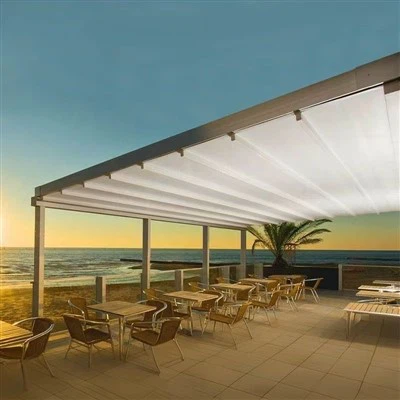
Sensory stuff is a big one I don’t see talked about enough. A lot of people with invisible disabilities—autism, ADHD, anxiety, even migraines—get overwhelmed by bright sunlight or loud echoey spaces. Pergolas are usually open, so the sun is blazing in during the day. Adding adjustable shade sails or retractable canopy panels that you can open and close manually (no heavy lifts) is a game-changer. We sell these lightweight canvas canopies that roll up and down with a cord—super easy for anyone to operate, even if you have limited hand strength. For echo: if your pergola has hard concrete or wood floors, add a few outdoor rugs with a soft, non-slip surface—they absorb sound. And if it’s near a busy street, add some planters with tall shrubs or vines to muffle the noise. I had a customer whose teen has autism and hates loud places—she put in the retractable canopy and some big bamboo planters, and now that kid spends more time on the pergola than in his room. That’s the stuff that matters.
Accessibility for people with visual impairments is another angle. I’ve talked to a guy who’s legally blind and said he used to avoid our pergola displays because he couldn’t tell where the posts were. Marking edges and obstacles with high-contrast tape—like bright yellow tape on the bottom of posts or the edge of the ramp—helps. Also, adding tactile paving along the edges of pathways or ramps: those are the bumpy concrete strips that let someone with a cane feel they’re approaching a change in direction or a step. You can get them in pre-cut strips, easy to install. And if you have lighting on the pergola—super important for evening use—make sure it’s not too bright (glare is bad for everyone, especially folks with vision issues) but enough that someone with low vision can navigate. We suggest LED string lights with a warm tone, not harsh white, and spaced 2 feet apart along the beams—perfect for lighting up the space without being overpowering.
What about if you’re retrofitting an existing pergola, not building a new one? A lot of people don’t want to tear out their old structure, and that’s totally fine. Small upgrades can make a huge difference. For example, if your pathway is gravel, just cover it with interlocking pavers (you don’t have to remove the gravel, just lay the pavers on top if the ground is level). Add a ramp to a small step with a pre-built aluminum ramp—lightweight, easy to install, no construction needed. Swap out old low benches for adjustable ones, or add portable wheelchair-accessible seating that you can move around. I worked with a guy last year who had a 10-year-old pergola and didn’t want to replace it. We added high-contrast tape to the posts, a retractable canopy, and a set of portable ramps for the step, and he said his sister (who uses a wheelchair) can now visit and use the pergola comfortably for the first time in years. No major demo, just a few hundred bucks and a weekend of work.
Wait, I should mention something about maintenance too. Accessibility features don’t matter if they’re not kept up. Loose pavers get more loose, ramps can get wet and slippery if you don’t sweep them, canopies get tangled if you don’t retract them when it rains. We send our customers a quick maintenance checklist every season—things like checking ramp handrails for wobbles, sweeping pathways, tightening bench armrests. It takes 10 minutes a week, and it keeps the space usable for everyone.
Also, let’s talk about not overdoing it. You don’t need to turn your pergola into a clinical space. The whole point is to keep that beautiful, open feel that makes pergolas special. I see a lot of people who get caught up in guidelines and add too much stuff, making it look functional but not fun. It’s a balance. For example, the high-contrast tape on posts is subtle—most people won’t even notice it, but it helps someone with low vision. The retractable canopy is sleek, not bulky. The benches with armrests still look like regular outdoor benches, not hospital furniture. That’s the sweet spot.
Here’s the thing that really stuck with me: a few months ago, a customer came to our warehouse with his mom. His mom is in a wheelchair, and he said she used to hate coming to family barbecues because she couldn’t get to the old pergola in their backyard. We walked through a couple of our models, and we picked one that had a wide entry, level path, adjustable seating, and a shade canopy. A week later, he sent us a photo of his mom sitting on the pergola, laughing with the family. That’s why we do this. Accessibility isn’t just a rule—it’s about creating a space where no one feels left out. If you’ve got a pergola, or you’re thinking of getting one, making it accessible isn’t just a favor—it’s making it work for everyone who uses it.

If you’re ready to upgrade your existing pergola or pick out a new one that’s built with accessibility in mind, we’re here to help. We don’t just sell structures—we chat with you about your specific needs, whether that’s a family member with a mobility aid, someone with sensory issues, whatever. We can customize everything from the path to the seating to fit what works for your space. Reach out to our team to talk through your options, no pressure, just real advice from people who know this stuff inside and out.
108 Roller Blind References: Americans with Disabilities Act (ADA) Accessibility Standards for Residential and Public Facilities, National Organization on Disability (NOD) Outdoor Accessibility Guidelines, Outdoor Industry Association Accessible Outdoor Spaces Report.
Guangdong Fanxi Youpin Intelligent Technology Co., Ltd.
We are one of the most professional pergola manufacturers and suppliers in China, also support customized service with low price. We warmly welcome you to buy high quality pergola for sale here from our factory. If you have any enquiry about pricelist, please feel free to email us.
Address: No. 22-2 Of Xiaodong Industrial Zone, Xiaodong Second Economic Society, Yanfeng Community, Shishan Town
E-mail: SunnyChueng@fshpyp.cn
WebSite: https://www.vancyoutdoor.com/
