If you’ve ever shopped for alumina grinding ceramic balls, you’ve probably wondered: can I get them in a size that fits my exact needs? Let me tell you straight—yes, they absolutely are available in custom sizes. As someone who’s been in the alumina grinding ceramic balls supply game for over a decade, I’ve helped dozens of clients tweak sizes to fix specific issues in their mills, and it’s one of the most common questions we get from new folks. No jargon, no vague answers—just the real deal on how custom alumina balls work for grinding applications. Alumina Grinding Ceramic Balls

First, let’s get this out of the way: why would you even need a custom size? A lot of people default to standard sizes (like 10mm, 20mm, 30mm) because that’s what they’ve always used, but here’s the thing: standard sizes don’t always match your mill’s design or your material’s grind properties. Let’s take a client I worked with last year, a small ceramic tile manufacturer. They were using 25mm standard balls in their horizontal mill, but they kept running into two problems: the balls were too big to get into the tiny, tight crevices of their tile slip, so the fine grinding was uneven, and they were bouncing around the mill instead of rolling, which wore down the mill liners faster. They needed a size specifically for their mill’s internal chamber—something between 18mm and 19mm, since the mill’s liner gaps only fit balls in that narrow range. We adjusted the formula for the alumina batch to tweak the firing process, and we cranked out a 18.5mm batch for them. Within a month, their grind uniformity improved by 12%, and their liner wear dropped 8%—all because the size was tailored to their setup.
Now, let’s talk about how the custom sizing process actually works, because it’s not just “tell us a number and we make it.” When a client reaches out for a custom size, first we dig into the basics: what’s your mill type (horizontal, vertical, planetary?), what material are you grinding (clay, minerals, pharmaceuticals, electronics components?), and what’s your desired grind fineness? Those details matter because the size affects how the balls interact with your load. For example, a pharmaceutical company grinding active ingredients needs ultra-precise tiny sizes (like 0.5mm for lab planetary mills), while a mining operation might need larger custom sizes (up to 50mm) for ball mills processing ore.
Next, once we lock in the target size, we adjust the production steps. Alumina grinding ceramic balls are made from high-purity alumina powder mixed with binders, shaped via isostatic pressing or extrusion, then fired at super high temperatures (around 1600°C for high-alumina variants). Changing the size isn’t just a matter of cutting down a standard ball—we have to adjust the pressing molds. For small custom sizes (under 1mm), we use specialized extrusion lines to get consistent, round pellets. For larger sizes, we custom-make isostatic molds, which are durable enough to handle the pressure needed to form dense, non-porous balls (porosity kills grind efficiency, so we can’t skip that). And here’s a key point: we don’t compromise on quality for custom sizes. The same properties that make alumina balls good for grinding—high hardness, low wear, chemical inertness—stay consistent whether it’s a standard 20mm or a custom 18.5mm.
Wait, but what about common misconceptions about custom alumina balls? Some people think custom sizes are way more expensive, or take forever to deliver. Let’s be real: there’s a slight cost difference, but it’s not as big as you’d think—especially if you’re ordering a minimum quantity (usually 500kg for most custom runs). And delivery? For most standard custom sizes (sizes between 5mm and 30mm, which are the most requested), we can turn around a run in 2-3 weeks. If you need something super small (under 1mm) or unusually large (over 50mm), it might take a bit longer—3-4 weeks—but we’ll always give you a clear timeline upfront, no hidden delays.
I also get a lot of questions about precision: how accurate is a custom size alumina ball? We aim for a tolerance of ±0.1mm for sizes under 10mm, and ±0.2mm for sizes over 10mm. That’s way more precise than standard sizes (which usually have a ±0.5mm tolerance), and it’s non-negotiable for us. If a client gets balls that are even a bit off, they’ll clump together in the mill, which ruins the grind. We test every custom batch with calipers and a hardness tester to make sure every single ball is within spec.
Another use case for custom sizes: mixing sizes. Wait, is that considered a “custom size”? Kind of, but it’s a common tweak we do. A lot of clients don’t need a single uniform size—they need a mix to fill the mill’s chamber better. For example, a paint manufacturer was using a mix of 20mm and 10mm standard balls, but they wanted a specific ratio of 15mm and 8mm for their low-viscosity paint. We blended the custom sized balls to their exact ratio, and their grind time dropped by 15% because the smaller balls filled the gaps between the larger ones, so every ball was actively grinding instead of bouncing. That’s another thing: custom sizing doesn’t have to mean a single size—we can do mixes, too, as long as you have the specs.
Let’s also touch on quality certifications, because a lot of industries require that. We’ve supplied custom alumina balls to food and pharma clients, so we make sure our raw materials meet FDA standards, and we provide all the necessary documentation for custom batches—test reports, material safety data sheets, all that stuff. If you’re in a regulated industry, just mention that upfront, and we’ll adjust the process to meet your compliance needs.
Now, I know some of you are probably thinking: “I’ve tried custom parts before, and they always have hidden issues.” So let’s cover the potential hiccups, because transparency is key. The only time a custom size might not work is if you give us a size that’s impractical for alumina ball production. For example, a size under 0.3mm is really hard to make without defects, and a size over 60mm is tough because the mold can’t handle the firing heat evenly. But if you’re in that range (0.5mm to 50mm), we can almost always make it work. We’ll let you know immediately if your requested size is outside our capabilities, no string attached.
Another thing: when you’re asking for a custom size, don’t be afraid to share your pain points. If you’re tired of uneven grind, if your mill liners are wearing too fast, if your finished product has inconsistent particle size—tell us that. That’s way more helpful than just saying “I need a 18.5mm ball.” We can use your issue to suggest a size that’s tailored to fix it, not just a random number. Like, the tile manufacturer I mentioned earlier didn’t know what size they needed, they just knew their current size was bad. We asked them for their mill’s internal dimensions, the particle size they wanted to grind to, and that’s how we landed on 18.5mm. No guesswork, just problem-solving.
So, to wrap this up: yes, alumina grinding ceramic balls are absolutely available in custom sizes. They’re not some fancy, hard-to-get product—they’re a standard option for most reputable suppliers, and as someone who’s been doing this for years, I can tell you that custom sizing is one of the biggest value adds we offer. It’s not just about meeting your size request; it’s about making your entire grinding process more efficient, saving you time and money in the long run.
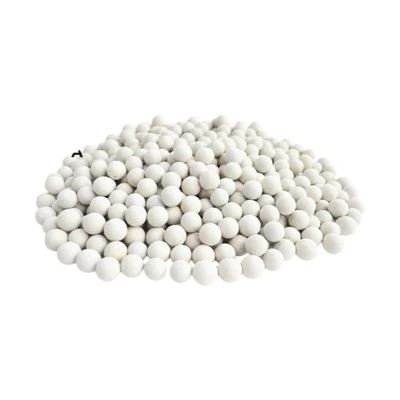
If you’re dealing with a grind issue that standard alumina balls haven’t fixed, or you just need a size that fits your mill perfectly, don’t hesitate to reach out. We can walk you through the process, answer all your questions, and put together a custom solution that works for your operation. No pressure, no jargon, just honest feedback and solid products.
Ceramic Honeycomb References:
- International Organization for Standardization. (2019). Technical Specification for Grinding Media for Ceramic Processing (ISO 21068-3:2019).
- The American Ceramic Society. (2021). Alumina Ceramic Balls: Properties and Industrial Applications.
- Grinding Media Industry Association. (2022). Custom Sizing of High-Alumina Grinding Balls: Best Practices for Manufacturers.
Jiangxi Pingxaing Longfa Enterprise Co., Ltd.
With abundant experience, we are one of the most professional alumina grinding ceramic balls manufacturers and suppliers in China. Please feel free to wholesale bulk premium alumina grinding ceramic balls at competitive price from our factory. Good service and quality products are available.
Address: Xiabu Industrial Park, Xiangdong, Pingxiang, Jiangxi, 337000, China
E-mail: admin@jxlongfa.cn
WebSite: https://www.lfceram.com/
