Hey everyone, let’s cut to the chase: if you’ve ever traveled abroad and stared at a wall of outlet sockets in a random country, holding your laptop charger like it’s a foreign key, you’ve definitely asked this question. As a power plug and cord supplier, I get this question all the time—like, almost every day from customers shipping products overseas, or folks asking if they can grab their US-made power tool to work on their European vacation. Today, I’m breaking this down without all the jargon, and letting you know exactly what’s actually compatible, and what’s not. Power Plug and Cord
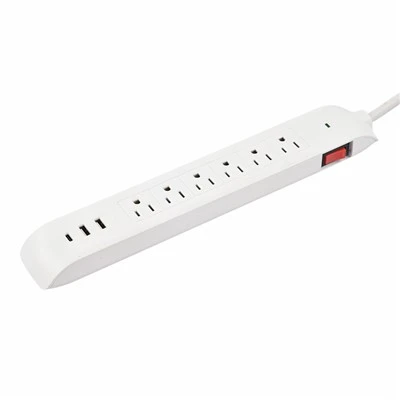
First, let’s get one basic fact straight: outlets don’t just take any plug. That’s why we have all those different types—Type A/B in North America, Type C/E/F in Europe, Type G in the UK, Type I in Australia, and so on. Each is built for specific voltage, prong shape, and spacing. A lot of people think “it’s just a plug, right?”, but nope—shape is only part of the puzzle, and ignoring the other parts can fry your device or the wall outlet, which is a nightmare for everyone.
Let’s start with the most common mix-up: plug shape vs. compatibility. I see so many people grab a cheap travel adapter off Amazon, plug it in, and think their stuff works—then realize it doesn’t charge, or worse, makes that weird buzzing noise when it’s supposed to power a space heater. Here’s the thing: a travel adapter doesn’t convert voltage, it just lets a plug fit into a socket. So if you take a 120V US charger (that’s Type A, two flat prongs) and plug it into a 230V European outlet (Type C, two round prongs) with just a shape adapter? That charger’s gonna die, fast—because it’s not built for double the voltage. We run into this with our clients all the time: small electronics (phones, laptops) often have built-in voltage converters, so they’ll say “works worldwide!” on the charger. Tools, kitchen appliances, and power cords that are hardwired to a single voltage? Those don’t have that luxury.
Now, let’s talk about power cords specifically, because that’s our bread and butter. A lot of people ask me, “can I swap my US power cord for a European one on my blender?” The short answer is: maybe, but you can’t just grab any cord. It has to match three things: the plug type, the amperage rating, and the voltage range. Amperage is super important—if a cord is rated for 10A, and your blender pulls 15A? That cord will overheat, melt the insulation, and start a fire. Scary, right? We test every cord we sell for that exact reason—we don’t cut corners on ratings, because that’s how people get hurt. I’ve had a client reach out to us last month who bought a cheap replacement cord for his table saw; the cord was rated for 15A, but the saw pulled 20A, and it almost caused a garage fire. That’s why we prioritize certified cords, not the generic stuff off the dollar store.
Another myth I hear nonstop: “all Type C plugs are universal.” Yeah, okay, Type C is those two round prongs you see in most of Europe, Asia, and even parts of South America. But wait—some countries have Type F, which is two round prongs with those little ground clips on the sides. Can you plug a Type C into a Type F outlet? Kind of. The prongs fit, but Type F outlets might have ground pins that the Type C plug doesn’t connect to, so you’re missing the ground. For things like a phone charger, that’s not a huge deal, but for anything with moving parts or higher wattage (like a space heater, a power drill), that missing ground is a safety hazard. We always tell customers: if you’re shipping a product that uses power, double-check not just the plug shape, but if it needs a grounded connection. Grounding isn’t just a buzzword—it’s what keeps you from getting a shock if something goes wrong.
What about international standards? IEC (the International Electrotechnical Commission) has tried to make things simpler for years, right? They have the universal Type C plug as a common low-voltage plug, but high-voltage stuff still has country-specific standards. The problem is, countries don’t always adopt the same IEC standards at the same time, or adjust them for their own electrical grid. For example, Japan has Type A and Type B, but their voltage is 100V, which is lower than the US’s 120V. So a US phone charger will work in Japan, but a Japanese hair dryer will almost certainly not work in the US—even if the plug fits, the voltage is too low, and it’ll burn out immediately.
Let’s also talk about equipment that’s built for export. A lot of our clients make products that sell in multiple countries, so they need power plugs and cords that can switch between regions without being a hassle. For example, a laptop that’s sold in both the US and Germany will have a charger that has a detachable cord—so you can swap a US Type A/B cord for a European Type C/E/F cord, no problem. That’s a smart design, because it means the same charger unit works everywhere, and you just change the cord based on where you’re selling it. We make a lot of these detachable cords for OEM clients, because they know it cuts down on cost and shipping, and customers don’t have to buy a whole new charger when they travel.
I get it, it’s confusing. You don’t want to buy 10 different power cords for different countries, and you don’t want to buy the wrong adapter that breaks your stuff. Here’s the cheat sheet I give every customer that asks: first, check your device’s label. Almost every modern device has a label that says something like “Input: 100-240V, 50/60Hz” — if that’s there, it’s dual voltage, so it will work with any outlet shape, as long as you have a shape adapter. If it only says 120V or only 230V? That device can’t just plug in anywhere without a voltage converter, and that converter has to be rated for the wattage of your device. Second, never skimp on the cord. Certified cords (UL, CE, VDE, whatever the country’s standard is) aren’t just more reliable—they’re tested to handle the exact voltage and amperage. Cheap cords skip the safety testing, and you’re taking a huge risk.
Wait, let’s talk about a common mistake I see with power tools, too. A lot of guys will bring their cordless drill (battery-powered, that’s fine) but their corded circular saw on a trip to France. They grab a random Type C plug cord from a local hardware store, plug it in, and wonder why it runs super slow. That’s because European grid frequency is 50Hz, while US (and Japanese) is 60Hz. A lot of older corded tools are designed for 60Hz, so running them on 50Hz makes their motor spin slower, which can damage the tool over time. That’s not a compatibility issue with the plug— that’s a frequency issue— but it’s part of the whole “does my cord work here” conversation. I always tell people to check the frequency rating if their device is corded, not just voltage.
So, back to the original question: are power plug and cord compatible with international outlets? The answer isn’t a straight yes or no—it’s sometimes, depending on three big things. 1) Does the plug’s shape fit the outlet? (But even if it fits, 2) Is the voltage and frequency matched to your device? And 3) Does the cord’s amperage rating match your device’s power needs? Skip any of those three, and you’re either gonna have a device that doesn’t work, or a safety risk.
As someone who’s been in this power plug and cord game for years, I’ve seen every mistake. I’ve helped a customer fix a blender that he fried because he plugged it into 230V US with a European plug. I’ve worked with a construction company to source custom cords for their equipment that works across 12 different European countries, so their workers don’t have to carry 5 adapters on a job site. I’ve seen what happens when you cut corners on cords, and it’s never good. That’s why we don’t sell junk—we sell cords that are tested, certified, and built to actually work, no matter where our clients are shipping their products.
Here’s the thing too: with the rise of remote work and global supply chains, more and more people and businesses are needing power solutions that work across borders. We don’t just make standard cords—we make custom cords for OEMs, replacement cords for appliances and tools, and even smart cords for industrial equipment that can adjust to different grids. It’s not one-size-fits-all, but with the right info, you don’t have to guess.
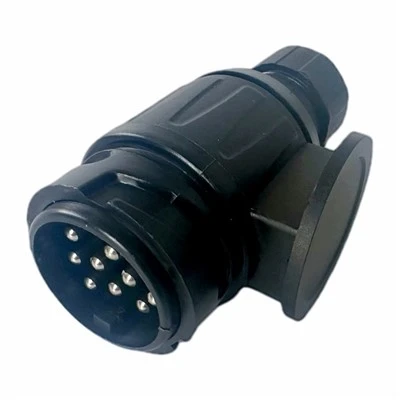
If you’re reading this and you’re a business that needs power plugs and cords for products that go international, or you’re someone who’s tired of dealing with bad adapters and burnt devices, reach out. We don’t do vague sales pitches—we tell you exactly what you need, no fine print, no overcharging for stuff you don’t need. Whether you’re a small business shipping phone chargers to 10 countries, or a construction company needing heavy-duty cords for job sites across Europe, we can hook you up.
America Standard Extension Cord References
National Electrical Manufacturers Association (NEMA) Standards for Plugs and Receptacles
International Electrotechnical Commission (IEC) 60884: Plugs and Socket-Outlets for Household and Similar Purposes
Underwriters Laboratories (UL) 62: Cord Sets and Power Supply Cords for Household and General Use
European Committee for Electrotechnical Standardization (CENELEC) HD 60360: Power Cords for Household Appliances
Yuyao Mideal Electric Co., Ltd.
Yuyao Mideal Electric Co., Ltd. is one of the most professional power plug and cord manufacturers and suppliers in China, also supports customized service. With abundant experience, we warmly welcome you to wholesale cheap power plug and cord in stock here from our factory. For price consultation, contact us.
Address: No.28, Lujiafan Road, Langxia Street, Yuyao City, Zhejiang Province, China
E-mail: manager@nbmideal.com
WebSite: https://www.midealcord.com/
