If you’ve ever stood on the floor of a commercial heat-treat shop or sat through a production review with a manufacturing line manager, you know how critical oxygen levels are inside industrial ovens—especially when you’re running processes like brazing, sintering, or annealing. I’m a supplier that’s worked with dozens of facilities over the past 12 years, and I’ve lost count of how many times I’ve seen a 30-minute production run ruined because someone misread a sensor, or a cheap probe failed mid-cycle, turning a batch of parts into scrap. That’s why I want to walk through exactly how to measure oxygen levels inside these controlled ovens—not just the technical specs, but the real-world pitfalls I see every day that even seasoned operators miss. Industrial Oven

First, let’s set a baseline: what “oxygen level” even means in an industrial oven, and why it’s not the same as checking the air in your home. For ambient air, oxygen hovers around 20.9% by volume, but most controlled industrial ovens run at levels far lower than that—sometimes as low as 10 parts per million (ppm) or even less, depending on the process. For example, vacuum sintering for powder metal parts often needs oxygen levels below 50 ppm to prevent oxidation, while braze welding for aerospace components might require levels under 10 ppm to ensure a strong, defect-free joint. If the oxygen level drifts too high, you get rusted parts, poor adhesion, or even a fire risk if you’re working with flammable atmospheres inside the oven. Too low, and you might waste nitrogen or argon (the purge gases most operations use to lower oxygen) or risk inconsistent heat distribution.
The biggest mistake I see new clients make is grabbing a standard oxygen sensor off the shelf and sticking it into the oven wall. Industrial ovens aren’t passive environments: they run at temperatures that can hit 2,000°F, have high-speed gas flows, and often have corrosive byproducts from materials being processed. Those off-the-shelf sensors can’t handle that, so they drift, give false readings, or die after a week. The first step to accurate measurement, then, is choosing a probe designed specifically for industrial oven use, not consumer or lab equipment.
Let’s break down the three most common types of oxygen measurement tools we specify for our oven clients, with their pros, cons, and ideal use cases:
- Zirconia Oxide Sensors: This is the workhorse for most industrial ovens, and the one I recommend for 70% of our projects. Zirconia is a ceramic material that only conducts oxygen ions when it’s heated to 600–800°C (1,112–1,472°F)—which is exactly the temperature range for many heat-treat processes, making it perfect. Here’s how it works: one side of the zirconia is exposed to the oven’s process atmosphere, and the other is exposed to a reference gas (usually ambient air, with a known 20.9% oxygen level). The difference in oxygen partial pressure between the two sides creates a voltage signal that translates directly to the oxygen level.
The key here is mounting. A zirconia probe can’t just sit loose inside the oven—it needs to be installed in a ¼-inch or ½-inch port in the oven’s wall, with a protective ceramic sheath to shield it from direct contact with hot parts or corrosive fumes. We always tell clients to run a purge gas (nitrogen, typically) through the probe’s reference line if the oven’s process atmosphere has high levels of moisture or volatile organic compounds (VOCs), because those can clog the reference side and throw off the voltage reading. I once had a client who skipped this step; his probe gave a reading of 100 ppm, but actual levels were closer to 800 ppm, because vinyl fumes from plastic parts had coated the reference inlet and blocked oxygen from reaching it. That mistake cost him two full batches of stainless steel parts that couldn’t pass quality control.
Zirconia probes are durable, respond quickly (usually in 1–5 seconds), and work well for oxygen levels from 1 ppm to 21%, which covers almost every industrial oven application. The downside? They need to stay hot—if the oven drops below 600°C, the sensor stops working, so you can’t use them for cool storage ovens or processes that run at room temperature. Also, they require regular calibration (every 1–3 months, depending on use) with a known gas mixture, because even small amounts of contamination can throw off the voltage.
- Paramagnetic Oxygen Analyzers: These are the go-to for ovens that run at lower temperatures, or for processes where you need extremely high accuracy (within 1 ppm, for example). Paramagnetism is a property where oxygen gas is attracted to a magnetic field, while most other process gases (nitrogen, argon, hydrogen) are not. The analyzer works by measuring how much the oxygen in the sample is pulled into a magnetic gap, then translating that force into an oxygen percentage.
I don’t recommend paramagnetic analyzers as the primary sensor for high-temperature ovens (above 1,000°C) because the sample line needs to be kept cool to prevent the gas from expanding and skewing readings. But they’re perfect for ovens running at 200–500°C, like those used for tempering aluminum or curing composite materials. The big advantage here is accuracy: a good paramagnetic analyzer can read to ±0.1 ppm, which is critical for processes where even a 10 ppm swing can ruin parts. For example, one aerospace client of ours uses a paramagnetic analyzer on their braze oven to ensure oxygen levels stay below 5 ppm—without that level of precision, they’d fail FAA quality checks on their turbine blades.
The downside? Paramagnetic analyzers are more expensive than zirconia probes, and they require a clean sample line—no particulates or oils can get into the analyzer, or the magnetic gap gets clogged. They also need a consistent sample flow, so if your oven’s gas flow is erratic, the readings will drift. We usually pair them with a filter and a flow regulator for that reason.
- Electrochemical Oxygen Sensors: These are the cheapest option, but also the most limited, and I only use them for low-temperature, short-cycle ovens (like small batch ovens for food processing or curing rubber). Electrochemical sensors work by having a gas diffuse through a membrane into an electrolyte, where a chemical reaction produces a current proportional to oxygen concentration. They’re simple, no heating required, and cheap to replace. But here’s the catch: they only work for oxygen levels above 100 ppm, and they have a lifespan of 6–12 months, even in ideal conditions. If you’re running a sintering oven that needs 50 ppm or lower, these sensors will never give you a correct reading. I’ve seen a small automotive shop try to cut costs by putting an electrochemical sensor on their powder metal sintering oven; within three weeks, the sensor was dead, and they lost a $10,000 batch of gears. It’s a false economy.
Once you’ve picked the right sensor, the next step is installation, and this is where 80% of measurement errors happen. A sensor is only as good as its connection to the oven. First, you need to drill a port in the oven’s wall in a location that’s representative of the entire oven’s atmosphere—not too close to the door (where gas leaks in) and not right next to a heating element (which can create a localized hot spot that doesn’t reflect the average oxygen level). We usually recommend installing ports 12–18 inches away from the top, bottom, and sides of the oven, in a area that’s not in the direct path of part loading or gas injection.
Second, the probe needs to be sealed properly. If there’s a leak around the probe’s mounting flange, outside air will seep into the oven, making the oxygen level reading higher than it actually is. We use high-temperature graphite gaskets for our probe installations because they can withstand up to 2,500°F and create a airtight seal. For clients with older ovens that have worn-out seals, we also suggest doing a leak test before calibrating the sensor: pump a tracer gas (like helium) into the oven, and use a helium detector to check for leaks around the probe, door, and joints.
Third, sample lines (if you’re using a paramagnetic analyzer) need to be as short as possible—no more than 10 feet, ideally. Any longer, and the gas cools down before it reaches the analyzer, changing its volume and skewing the reading. We also heat trace the sample lines for paramagnetic analyzers so the gas stays at a constant temperature, which eliminates that error.
Calibration is the next critical step, and it’s not something you can set and forget. Even the best zirconia probe will drift over time, because of contamination or aging. I tell all our clients to calibrate their sensors:
- For zirconia sensors: Every 1–3 months, depending on how often the oven runs. To calibrate, you use two gases: a zero gas (100% nitrogen, to get a 0 ppm reading) and a span gas (a known low level of oxygen, like 50 ppm nitrogen-oxygen mix, to confirm the reading is accurate at your process’s target). For ambient range checks, you can just expose the sensor to open air, which should read 20.9% oxygen.
- For paramagnetic analyzers: Every 6–12 months, because they’re more stable, but you still need to do a zero and span calibration. Some modern analyzers have auto-calibration features, but I still recommend a manual check once a quarter to make sure the auto-cal isn’t missing a hidden contamination issue.
- For electrochemical sensors: Every month, because they drift fast, and replace them every 6 months, no matter what. I once had a client who ignored that rule; his sensor was reading 50 ppm, but actual levels were 200 ppm, and he ended up with a lot of parts that had to be reworked.
Then there’s the topic of continuous monitoring vs. spot checks. Some small ovens only need a quick oxygen level check once a day, but most industrial processes require 24/7 monitoring to catch drift mid-cycle. For continuous monitoring, you’ll want a system that logs data, so you can track trends over time—like if oxygen levels start rising as the oven’s purge gas line gets clogged, so you can replace the filter before it causes a problem. We always integrate our sensors with our clients’ existing PLC systems, so operators get an alert if oxygen levels go outside their set parameters, which prevents scrap before it happens. Spot checks, for small batch runs, can be done with a portable oxygen analyzer—we keep a portable paramagnetic unit in our service truck for on-site testing, and I always recommend doing a spot check when you first start a new process, to confirm your fixed sensor is working correctly.
I also want to talk about common misconceptions that I hear all the time. One is that “lower oxygen is always better.” No—if you run too low, you’re wasting purge gas, which can add thousands of dollars a month to your utility bills. A good sensor will let you find the sweet spot: for example, a sintering process might need 40 ppm, not 10 ppm, so you can run your purge gas at a lower flow rate without risking oxidation. Another misconception is that all oxygen sensors are the same. We’ve seen clients buy cheap generic probes online that don’t have proper ceramic shielding, and they fail within days. Stick to sensors designed for industrial oven use, not lab or consumer grade. If you’re not sure, ask your supplier for specs on temperature range, pressure rating, and contamination resistance.
If you’re still not sure which method is right for your oven, the most important thing is to work with someone who knows both your process and the equipment. I’ve been through the pain of ruined batches and failed quality checks, so I can’t stress enough how accurate oxygen measurement is the backbone of a reliable industrial oven process.
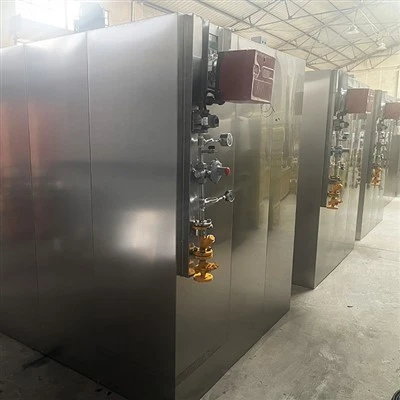
At the end of the day, getting oxygen levels right isn’t just about numbers—it’s about quality, cost, and peace of mind. If you’re in the market for a new industrial oven system, or you’re looking to upgrade your current oxygen measurement setup, we can tailor a solution to your specific process needs. Reach out to our team to discuss your requirements, and we’ll help you avoid the mistakes that cost so many facilities time and money.
Industrial Furnace References
- "Industrial Oxygen Measurement for Heat Treatment Processes," Instrumentation, Systems, and Automation Society (ISA), 2021.
- Zirconia Oxygen Sensor Operation and Maintenance Guide, Endress+Hauser, 2022.
- "Paramagnetic Oxygen Analyzers for Low-Temperature Industrial Ovens," Journal of Manufacturing Engineering, Vol. 18, No. 3, 2020.
- Industrial Oven Safety and Process Control Guidelines, National Fire Protection Association (NFPA), 2023.
- "Calibration Best Practices for Industrial Gas Sensors," International Society of Automation (ISA), 2022.
Nanjing Ranran Tiancheng Drying Equipment Co., Ltd.
As one of the most professional industrial oven manufacturers and suppliers in China, our products have good reputation in the market. Please feel free to buy advanced industrial oven for sale here from our factory. All customized products are with high quality and competitive price.
Address: No. 5 Xinhua Road, Shangba Village, Longtan Street, Qixia District, Nanjing City
E-mail: rrtc@rrtcoven.com
WebSite: https://www.rrtcoven.com/
