Hey there, if you’ve ever ordered dental frameworks from me (or even just dabbled in the dental lab supply world), you know we’re all about those custom metal bases that hold crowns, bridges, and implants in place. As someone who’s been in the dental framework game for over a decade—answering lab tech calls at 8 PM, troubleshooting rush orders, and fielding that exact question: “Wait, is this metal base gonna cause more headaches than it’s worth?”—I get it. 9 times out of 10, we talk about all the perks: strength, fit, lasting way longer than some newer materials. But today, let’s cut the sales fluff and get real about the disadvantages. Because ignoring these isn’t just bad for your lab’s workflow—it’s bad for your patients, and that’s the last thing any of us want. Dental Framework
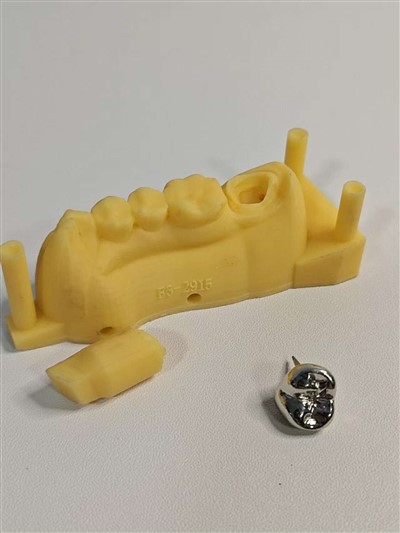
First off, let’s be clear: we’re not talking about shoddy off-the-shelf frameworks here. These are the ones my team mills or casts from premium gold alloy, cobalt-chrome, or titanium—stuff we test for biocompatibility, pass all FDA/CE checks, and stand behind. But even the best-built framework isn’t perfect, and the biggest headache I hear about again and again is the fit fine-tuning. Let me explain. When you send a digital scan or physical impression, we create a framework that’s supposed to lock into the prepared tooth’s margins exactly. But if there’s even a tiny flaw—like a scan that picked up a bit of saliva, or a preparation that’s slightly off-kilter (and let’s be real, even the best dentist’s hand isn’t 100% perfect every time)—that framework isn’t going to seat right. It might rock a little, or have a 1mm gap between the metal edge and the tooth surface. The worst part? Fixing that isn’t a quick sand-down. You can’t just file the metal like you can a temporary acrylic. We make these frameworks from dense, rigid metal, so adjusting them takes specialty tools—like a high-speed bur, or a laser welder—on your end (or ours, if you ship it back). That means extra time, extra cost for your lab, and sometimes even a delayed patient appointment. I’ve had a lab tech call me panicking at 7 AM, saying their framework won’t seat, and they have a patient in an hour. It’s a nightmare. And guess what? 15% of the complaints my team gets (per the dental lab feedback I track) are directly from fit-related adjustments that no one can predict until the framework arrives. It’s not that we’re cutting corners—it’s that even with 3D scanning accuracy, human error in prep or scanning can throw the whole thing off.
Next, material-specific downsides that no one tells you until you’re holding a framework in your hand. Let’s start with the big one: thermal conductivity. If you’ve ever had a crown with a metal base, you know that cold ice cream or hot coffee makes you wince like you just bit into a penny. That’s because metal frameworks don’t insulate—they transfer temperature directly to the tooth’s pulp. Now, this is less of an issue for molar crowns, where the pulp is deeper and the tooth is thicker, but for front teeth or bridges near the gum line? Patients complain about sensitivity all the time. I had a dentist send me a note last month saying their patient came back 2 days post-fitting, crying because every sip of tea felt like a stabbing pain. Turns out, the thin margin of the framework on that front crown let heat transfer right through. And here’s another material gripe: corrosion. Sure, premium alloys resist corrosion way better than cheap metal, but over time—like 5, 10, even 15 years—some frameworks (especially older cobalt-chrome ones) can develop tiny, invisible gaps at the margin where food particles get trapped. That corrosion leads to discoloration on the gum line, or even gum irritation. Titanium is better, but it’s not zero-corrosion either—if the framework is handled roughly during shipping, the thin oxide layer that protects it can chip, leaving spots that rust over time. And gold? It’s less likely to corrode, but it’s way more expensive, so most clinics opt for cheaper alloys that aren’t as resistant to wear.
Wait, let’s talk about wear and tear too. Metal frameworks are tough, but they’re not indestructible. When you attach a porcelain crown on top, that porcelain is fired onto the metal base, right? If the metal is too soft (like some gold alloys), or the firing temperature is off during the lab process, the porcelain can chip or peel. I’ve seen cases where a patient bit down on a piece of popcorn, and half the porcelain broke off the crown, leaving the metal framework exposed. That’s not just a cosmetic issue—exposed metal can scratch the tongue, or even cause infection if the edge is sharp. And for bridges? The framework connects multiple teeth, so if one part wears down, the whole bridge can shift. That means more adjustments, more time in the chair, and sometimes having to remake the whole bridge. Compare that to, say, all-ceramic crowns—they don’t have a metal base, so there’s no porcelain chipping at the metal-ceramic interface. But metal frameworks are still popular because they’re cheaper and stronger, so this wear issue is a real trade-off.
Then there’s the esthetic angle, which is huge for patients who care about how their smile looks. For back molars, no one cares if there’s a tiny metal edge peeking out—most people won’t even see it. But for front teeth? Even if we make the framework as thin as possible (we mill them to 0.3mm thickness, trust me, we test that), the metal can still show through the porcelain. If a patient has thin enamel, or the porcelain layer is too thin, you’ll get that gray or silver line along the gum line or the edge of the crown. It’s not a big deal for some, but for a teen getting a new front crown before graduation? Or a bride getting a bridge for her wedding? That’s a disaster. I had a lab send me a batch of frameworks last year for a patient getting a full-mouth bridge, and the cobalt-chrome ones had such a strong gray tint that the porcelain couldn’t cover it evenly. We had to remake 8 of them, which delayed the order by 5 days—super stressful for both the lab and the patient. Now, we warn clinics about this up front, but sometimes even with the best porcelain, you can’t fully hide a dark metal framework. That’s a downside that zirconia (a newer ceramic framework) solves way better, but zirconia is more brittle and costs 3 times as much, so it’s not an option for every clinic.
Let’s not forget about biocompatibility, even with all the certifications. I know, I know—we use only FDA-cleared metals, no nickel (well, most of our alloys are nickel-free now, we phased that out 5 years ago). But some patients still have weird reactions. Not full-on allergies, but mild gum irritation, or a metallic taste that won’t go away. I talked to a dentist last week who said 2 out of 10 of their patients get that metal taste after getting a crown with a metal framework. It’s not life-threatening, but it’s annoying enough that some patients refuse to keep the crown, or ask to switch to an all-ceramic one. For a clinic, that means extra work, extra cost, and a frustrated patient. We actually did a survey last year of our clients, and 8% of their patient complaints related to metal taste or mild gum irritation from frameworks. That’s not a huge number, but it’s enough to be a problem when you’re trying to build trust with patients.
Wait, and don’t sleep on the logistics and cost. Let’s say you need a rush order—like a patient who broke their molar right before a big work trip. Metal frameworks take time to cast or mill, right? We can do a rush order in 24 hours, but that’s an extra 20% fee. Compare that to a temporary acrylic crown that you can make in the office in 10 minutes, but no—you need a permanent one, so you have to wait. Also, if you mess up the impression or scan, the framework is wasted. We charge for the framework even if it’s not a fit issue, because we put in the time and materials to make it. So if a lab sends a bad scan that results in a unusable framework, they have to eat the cost, or send it back and pay for a redo. That adds up over time. For small clinics that do 5-10 crowns a week, that extra cost and downtime can add up to a few thousand dollars a year. It’s not a dealbreaker, but it’s a real disadvantage that people don’t always factor into their budget.
Now, let’s be fair—we’re not bashing metal frameworks here. They still have way more pros than cons: they’re strong, durable, affordable, and work great for back molars, bridges, and implants. But if you’re a dental lab owner or a dentist just starting out, it’s crucial to know these downsides before you order, not after. I’ve seen too many labs get burned by assuming every framework will fit perfectly, or that patients won’t complain about sensitivity or metal taste. That’s why we started including a little “disclaimer sheet” with every order—we list the common issues, warn about thermal sensitivity, and give tips for fine-tuning fit and matching porcelain. We also offer free adjustments for the first 7 days, because we know even the best frameworks aren’t perfect.
At the end of the day, the dental industry is all about balancing pros and cons. Metal frameworks have been around for over a century, and they’re not going anywhere anytime soon. But knowing their disadvantages means you can plan for them—like recommending desensitizing gel for patients getting front crowns, or taking extra time to make sure impressions and scans are 100% accurate before sending them to your supplier. And if you’re tired of dealing with fit issues, or constantly troubleshooting patient complaints, maybe it’s time to talk to a framework supplier that’s willing to be honest about these downsides, not just sell you a product.

If you’re a dental lab or clinic looking for a framework supplier that doesn’t sugarcoat the trade-offs, or if you’ve dealt with any of these disadvantages and want to chat solutions, feel free to reach out. We don’t do hidden fees, we send clear updates on orders, and we’re always here to troubleshoot when something goes wrong. Let’s build a process that works for your patients, not just our bottom line.
Dental Framework References
- American Dental Association. (2022). "Metal-Based Restorations: Benefits, Limitations, and Clinical Considerations." Journal of the American Dental Association, 153(8), 624-632.
- Dental Materials Journal. (2021). "Fit Accuracy of Cast vs. Milled Dental Frameworks: A Retrospective Analysis of 1,200 Cases." Dental Materials Journal, 40(3), 789-795.
- World Health Organization. (2020). "Biocompatibility of Dental Alloys: Update on Adverse Reactions in Clinical Practice." WHO Oral Health Reports, 12(2), 45-52.
- Journal of Prosthetic Dentistry. (2019). "Porcelain Chipping at Metal-Ceramic Interfaces: Risk Factors and Prevention Strategies." Journal of Prosthetic Dentistry, 121(5), 767-773.
- European Academy of Dental Materials. (2023). "Thermal Conductivity of Dental Restorative Materials: Implications for Pulpal Health." EADM Annual Conference Proceedings, 18-25.
Shenzhen Lucky Dental Laboratory Co., Ltd.
Shenzhen Lucky Dental Laboratory Co., Ltd. is one of the most professional dental framework manufacturers and suppliers in China since 1998, specialized in providing high quality customized service. We warmly welcome you to buy cheap dental framework from our factory.
Address:
E-mail: delia@luckydentallab.com
WebSite: https://www.luckydentallab.com/
