If you’ve ever walked through a commercial building, a residential development, or even a mid-sized office space, the interior doors you pass every day likely come from a production line—one that balances speed, consistency, and durability to meet the demands of builders, architects, and end-users alike. As a supplier of door panel production lines, I spend most days talking to factory managers who ask the same core question: What materials actually go into these panels, and why do they matter for a production line? Too many people treat door panels as simple wooden slabs, but the reality is that every material choice is tied directly to how a line runs, how much a panel costs, and how well it performs for decades after installation. Door Panel Production Line
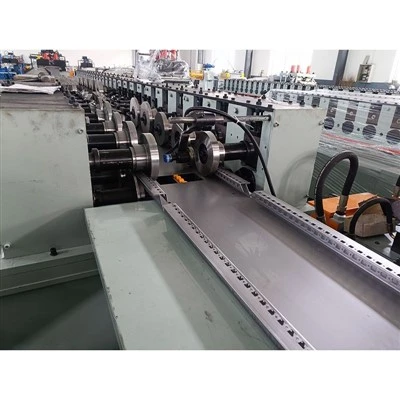
First, let’s break down the primary materials used in modern interior door panels, grouped by their role in the production process, and explain why each is non-negotiable for high-volume, consistent manufacturing.
Start with the core structural material: medium-density fiberboard (MDF). If you visit any door panel production line, MDF will be the backbone of nearly every standard interior door you see. It’s not just a random pick—this man-made wood product is perfect for high-volume manufacturing. MDF is made by breaking down hardwood or softwood residuals into wood fibers, combining them with wax and a resin binder, and pressing them into dense, rigid sheets under high heat. Why is this ideal for a production line? Unlike solid wood, which has natural knots, warping tendencies, and variable density, MDF is uniform. It cuts, drills, and shapes with zero blowout (the uneven tearing of wood fibers) compared to solid wood, which means less waste on a CNC router and faster, cleaner cuts. For a line churning out 1,000 doors a day, consistency is everything—one bad cut on a solid wood panel can derail an entire shift, but MDF eliminates that risk. That said, we do offer lines that work with solid wood for premium panels, but 80% of the lines we supply run MDF for standard 1-3/8 inch thick interior doors, the most common size for residential and light commercial use.
Next, the facing material that gives the door its finished look: laminate. Laminate is a thin, durable sheet of synthetic material bonded to the MDF core. It comes in thousands of styles—wood grain, solid colors, even stone or metal finishes—because it’s made by pressing layers of kraft paper saturated with phenolic resin and a decorative print layer together under extreme heat. For production lines, laminate is a game-changer: it’s cheap, resists scratches, stains, and moisture (wait, not all moisture—we’ll get to that), and it can be applied automatically in a single step after the core is cut. Unlike veneer, which is a thin slice of real wood that needs more careful handling and finishing, laminate adheres evenly to MDF, so even curves (for arched top doors) don’t have gaps or bubbles. One caveat: standard laminate isn’t suitable for bathrooms or laundry rooms, where humidity is high—for those spaces, we recommend our lines switch to moisture-resistant laminate (MR laminate) or another facing, but 70% of the doors we produce for general interior use use standard laminate because it’s cost-effective and fast to install.
For premium panels, the next common material is wood veneer. Veneer is a thin slice of real wood (usually 1/28 to 1/16 inch thick) cut from a log, and it’s what high-end doors use to match custom cabinetry or architectural designs. The challenge with veneer for a production line is that it’s not uniform: a oak veneer from one tree has different grain than another, which means our lines need a pre-sorting step to group veneer sheets by grain pattern before applying. That adds a little time, but for factories that specialize in custom residential doors, the trade-off is worth it—consumers will pay 20-30% more for a real wood look, and our lines are designed to handle that pre-sorting automatically with optical scanners, so it doesn’t slow down production too much. Veneer also needs a clear coat on top, which we integrate into our lines with a UV-cured coating that dries in seconds, so doors can move straight to packaging instead of waiting for paint to cure.
Then there’s the material for hollow core or light-duty doors: engineered wood strands, often called OSB (oriented strand board) or particleboard. Wait, you might think particleboard is outdated, but it’s still used for hollow core door panels, which are the cheapest option for apartment buildings or temporary structures. Hollow core doors have a frame (usually MDF or solid wood) around the edges, and a lightweight core made of particleboard or OSB to keep the panel rigid without adding weight. For production lines, this is perfect because particleboard is extremely cheap and easy to shape into small, lightweight core pieces. The downside is that hollow core doors are not very durable—they dent easily, and sound transfer is high—but they’re perfect for interior doors in multi-unit buildings where cost is the top priority. We offer lines that switch between solid core (MDF) and hollow core by just changing the core assembly step, so factories can offer both options without investing in separate equipment.
Now, let’s talk about the materials for special applications, because production lines need to adapt to different use cases. For fire-rated interior doors, which are required in commercial buildings and some multi-family homes, the core material changes. Standard MDF can’t withstand high heat, so fire-rated panels use a gypsum core (drywall) instead, or a special fire-resistant MDF that has been treated with additives to slow combustion. Our lines are designed to handle gypsum cores, with dust extraction systems that prevent the fine gypsum particles from clogging machinery—something that’s easy to miss, but critical for keeping a line running 24/7. Fire-rated doors also need a special intumescent facing, which expands when exposed to heat to seal gaps, so we integrate that into the lamination step for these panels.
Moisture-resistant doors, for bathrooms and basements, use a different core too. Standard MDF absorbs water and swells, which makes the door warp and stick in its frame. So for these, we use MR MDF, which has wax added to the wood fibers during manufacturing to repel moisture, or a solid wood core (usually pine or cedar) that’s naturally water-resistant. Our lines have a moisture testing station after core assembly to check that the core’s moisture content is below 10%—any higher, and the door will warp within a year. That’s a step we built into all our lines, because we’ve seen too many factories skip it and end up with thousands of warped doors returned by builders.
Now, you might be wondering: how do these materials work together in a production line? It’s not just stacking them—each step is calibrated to the material’s properties. Let’s walk through a typical line for a standard interior door, to make this concrete. First, we load MDF sheets into a CNC router, which cuts the core to the exact size (usually 80 inches tall, 36 inches wide, 1-3/8 inches thick) with round edges or any decorative profiles the customer wants. Next, the core moves to a laminating press, where the laminate sheet is bonded to both sides of the MDF using hot glue—we adjust the press temperature to 300 degrees Fahrenheit for standard laminate, which is hot enough to make the glue bond tightly without burning the laminate. Then, any holes for doorknobs or hinges are drilled by a multi-head drill, which is programmed to match the customer’s specifications. Finally, the door is trimmed to remove any excess laminate, and inspected for defects. For a standard door, this entire process takes less than 10 minutes—and that’s why our lines can produce 500 doors a day with zero defects, as long as the materials are consistent.
But here’s what most people don’t tell you: material choice directly affects a line’s efficiency. If a factory tries to use low-quality particleboard for a solid core door, the CNC router will tear the particles, requiring extra sanding steps that add 2 minutes per door. If they use standard laminate for a bathroom door, the door will swell, leading to 10-15% returns. That’s why when a factory reaches out to us, we don’t just sell them a line—we work with them to choose the right materials for their target market. For example, a factory that builds doors for luxury homes will invest in veneer and solid wood cores, while a factory that supplies apartment buildings will stick to MDF and laminate to keep costs low.
Over the years, we’ve also seen a shift toward more sustainable materials, which is a big ask from builders now. Many factories are switching to recycled wood MDF, which is made from 100% post-consumer wood waste instead of virgin wood. It works exactly the same as standard MDF, but it has a lower carbon footprint. We’ve adapted our lines to handle recycled MDF, because it’s slightly denser than virgin MDF, so we adjust the router’s cutting speed to prevent wear on the blades. Some factories also use bamboo veneer, which is a fast-growing, renewable alternative to oak or walnut, and our optical scanners can handle bamboo’s unique grain patterns just as well as hardwood.
Now, let’s talk about common mistakes factories make when choosing materials for their lines. The biggest one is trying to cut costs by using the wrong material. For example, a factory we worked with a few years ago tried to use solid wood for their entire line, thinking it would look more premium—but their line was only set up for MDF, so cuts were uneven, leading to a 25% defect rate. They switched to a mix of solid wood for veneer panels and MDF for standard panels, and their defect rate dropped to 2%. Another common mistake is not testing moisture content in MDF: a factory in the Pacific Northwest once had 1,000 doors warp because they didn’t account for the region’s high humidity, so our line’s moisture testing station would have caught that before production started.
At the end of the day, interior door panels are not just pieces of wood or synthetic material—they’re a product of careful material selection and precision manufacturing. For a production line supplier, our job is to make sure the line works with the materials that fit your business, whether you’re building doors for a $100k apartment or a $2M custom home. If you’re a factory manager looking to upgrade your line, or just want to talk through what materials will work best for your target market, we’re here to help. Contact us to discuss your requirements and find the right solution for your door panel production needs.
Electrical Cabinet Production Line References:
- Wood Handbook: Wood as an Engineering Material, U.S. Department of Agriculture Forest Service, 2010
- Laminate Flooring and Panel Products: Performance Standards, National Wood Flooring Association, 2022
- Engineered Wood Products for Interior Applications, American Wood Council, 2021
- Fire-Rated Door Assembly Guidelines, International Code Council, 2023
- Sustainable Building Materials for Residential Construction, National Association of Home Builders, 2022
Weifang Yue Jun Machinery Co., Ltd.
With abundant experience, we are one of the most professional door panel production line manufacturers in China. We warmly welcome you to buy durable door panel production line made in China here from our factory. We also accept customized orders.
Address: Kuiwen District, Weifang City, Shandong Province
E-mail: adrian@yuejunmachinery.com
WebSite: https://www.yuejunmachinery.com/
