If you’ve ever stood in a packed arena at a concert, eyes drifting up to the sleek, rigid trusses holding lights, speakers, and even stage props 30 feet in the air, you’ve seen the backbone of any successful live event. As a stage truss supplier with 12 years in the business, I’ve assembled and overseen the installation of global truss systems for everything from small theater tours to sold-out festival main stages, and let me tell you: assembling one isn’t just lining up metal bars and bolting them together. A global truss system—one that can span multiple continents, adapt to different venue sizes, and hold consistent load capacities no matter where it’s deployed—requires intentional planning, precise execution, and a focus on safety that never gets overlooked. This isn’t a project for last-minute fixes; it’s the kind of work that separates a smooth event from a disaster that can cost tens of thousands of dollars, not to mention risk the lives of crew and attendees. Stage Truss
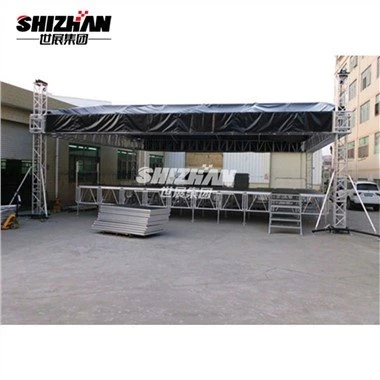
First, let’s define what a global truss system actually is, because the term gets thrown around a lot these days. Unlike a local truss set built for a single small venue, a global truss system is designed to be manufactured in standardized components, shipped efficiently across borders, and assembled to fit nearly any venue layout—from a 500-seat black box theater to a 80,000-capacity outdoor stadium. It uses universal connectors, load-rated hardware, and pre-tested truss segments that work together, so if your tour is moving from London to Singapore to Mexico City, you don’t need to build a new truss every time. As a supplier, we engineer our global truss to meet industry standards like those set by the Entertainment Services and Technology Association (ESTA) and the European Committee for Standardization (CEN), which means it’s held to consistent load, durability, and safety rules no matter where it’s used. That consistency is non-negotiable; a truss that works in dry, temperate Chicago can behave very differently in humid, coastal Miami, so accounting for environmental factors is step one before you even pick up a wrench.
The first phase of assembling a global truss system is pre-planning, and this is where most mistakes start. I once had a client who skipped this step for a 2019 European tour, and they ended up ordering extra truss segments that were the wrong length, delaying load-in by three days and adding $15,000 in rush shipping fees. Don’t be that person. Pre-planning starts with venue mapping. You need exact measurements of every space you’ll work in: ceiling height, floor load capacity, width and depth of the stage area, and any obstructions like support columns or rigging points. For a global system, you also need to account for transportation constraints—truss segments longer than 40 feet can’t fit in standard shipping containers, so you’ll either need to split them into two pieces that bolt together on-site or plan for specialized shipping. Next, calculate your load requirements. Every truss has a maximum load rating, and that rating applies to the entire system, not just individual segments. You need to add up the weight of lights, speakers, video screens, wiring, and even the rigging hardware itself, then add a 25% safety margin—ESTA recommends this, and I’ve seen countless engineers cut corners here and pay the price. If you’re deploying your truss internationally, don’t forget to check local rigging regulations. Some countries have specific rules for truss assembly heights and load testing that aren’t standard in the U.S., so a quick consult with a local rigging professional can save you from getting stuck at the border or denied access to a venue.
Once your planning is done, it’s time to prepare your site and your materials. As a truss supplier, we deliver pre-inspected, labeled segments, so the worst thing you can do is unload them and pile them all in a corner. Organize your truss segments by type, length, and load rating—aluminum truss is lightweight and common for most applications, but steel truss is stronger for heavy loads like large video screens. You’ll also need to lay out your base: a level surface is critical. If you’re assembling on a stage, check the floor for dips or unevenness; even a half-inch gap under a support leg can shift the entire truss’s center of gravity, leading to instability. For outdoor venues, use load-rated ground plates or adjustable jack stands to distribute weight evenly, never place truss directly on grass or dirt that can shift after rain. Also, gather all your tools and hardware before you start: correct-size wrenches, torque wrenches (not standard hand wrenches—torque ensures bolts are tightened to the exact specification so they don’t loosen during an event), a level, tape measure, and a ladder or lift that’s rated to work at your truss height. And don’t forget personal protective equipment: hard hats, safety glasses, and non-slip boots for everyone on the crew.
Now, the actual assembly process. Start with the base frame, the foundation of your global truss system. For most global designs, this is a rectangular grid of truss segments connected with universal couplers—our supplier-standard couplers work with all major truss brands, which is key for a global system that might mix components from different regions. Align each segment carefully, checking the alignment with a level every few feet, and hand-tighten bolts first to make adjustments easy, then go back with a torque wrench to hit the manufacturer’s specified torque setting. A common mistake here is over-tightening bolts, which can warp the truss’s connections, or under-tightening, which leads to wobbling. For multi-level truss systems, add vertical support legs at the corners and every 8 to 10 feet along the base frame to distribute weight evenly. These legs should be adjustable, so you can level the entire base even if the floor is uneven. Once your base frame is secure, build the horizontal grid for the upper trusses. Global systems are designed to be modular, so you can add or remove segments to fit different spans—for example, a 60-foot span for a festival main stage, or a 30-foot span for a small theater. When connecting segments, make sure the couplers are centered on the truss’s joints, not off to one side, and use at least two bolts per connection point to hold it stable.
Next, install the load-bearing elements—this is where your pre-calculated load rating matters most. The lights, speakers, and video screens attach to the underside of the truss, so you’ll need to add truss clamps or adapter plates that are rated for the specific weight of each piece. Never rig more than one heavy item on a single truss node without reinforcing it—if you’re hanging a 500-pound video screen, add extra support beams 6 inches on either side of the node to distribute the weight. For global truss systems, we also recommend installing load cells at key points to monitor weight in real time during setup, especially for large outdoor events where wind can add unexpected stress. After you’ve hung all your equipment, do a visual inspection: check every bolt and coupler, make sure all cables are secured and not pulling on the truss, and double-check that the level of the entire truss is within 1/8 inch, as recommended by ESTA. Once the truss is loaded with all its equipment, test it for stability by having two crew members press firmly on the center of the truss—if it moves more than a few inches, you need to add more support legs.
Finally, pre-deployment testing and documentation. This step is especially important for a global system, because you need to prove to venue managers and local regulators that your truss is safe. First, do a static load test: add 150% of your total calculated load to the truss and leave it for 24 hours, checking for any bending or shifting. For events where wind is a factor, do a wind load test using a portable fan or wind gauge to make sure the truss can handle the maximum wind speed forecast for the event. Documentation is key for global deployment: keep a log of all truss segments, their load ratings, torque settings, and inspection results, because different countries may require you to show proof of safety before you’re allowed to rig. I once had a show in Brazil where local inspectors refused to approve our truss because we didn’t have a translated copy of the load test log, which cost us a full day of load-in. Learn from that: translate all documents into the local language, and have a local rigging professional review your work to make sure it meets local standards.

Assembling a global truss system isn’t a one-size-fits-all process, but following these steps will keep your events safe, on schedule, and within budget. The biggest advantage of a global truss system is its flexibility—you can repurpose the same set for a tour across multiple countries, instead of buying new truss every time, which saves both money and waste. But that flexibility only works if you plan carefully, execute precisely, and never cut corners on safety. If you’re preparing for your next event, need to customize a global truss set, or have questions about load requirements for a specific venue, our team is ready to help. Reach out to our sales team to discuss your project, get a custom quote, and make sure your truss system is built to last, no matter where the road takes you.
Stage Truss References
- Entertainment Services and Technology Association (ESTA). 2021. “ANSI E1.8-21: American National Standard for Rigging and Loading of Temporary Structures for Theatrical, Television, and Live Events.”
- European Committee for Standardization (CEN). 2019. “EN 13814: Railway Applications – Railway Infrastructure – Trusses for Stage and Temporary Structures.”
- Stage Rental & Production Association (SRPA). 2022. “Global Tour Rigging Best Practices for International Event Deployment.”
Jiangsu Shizhan Group Co., Ltd.
Jiangsu Shizhan Group Co., Ltd. is one of the most professional stage truss manufacturers and suppliers in China, specialized in providing high quality products and service. We warmly welcome you to buy custom made stage truss at competitive price from our factory. Contact us for more details.
Address: 80# Xixin Road, Xibei Town, Xishan District, Wuxi, Jiangsu, China
E-mail: jsshizhan@shizgroup.com
WebSite: https://www.leadertrusses.com/
