Hey there, if you’ve ever wondered how industries get the pure oxygen, nitrogen, and argon they use for everything from making steel to packaging snacks or even cooling semiconductors, you’re probably familiar with air separation units (ASUs). And if you’ve started digging into the environmental side of this stuff, you’ve likely noticed that not all ASUs are created equal when it comes to their impact on the planet. As someone who’s been deep in the ASU game for years—we supply all the main types to manufacturers, hospitals, and tech firms across the country—I’ve seen firsthand how the choice of ASU can make a huge difference for both your bottom line and your carbon footprint. Let’s break down the most common ASU types, their environmental hits, and what that means for your business. Type Of Air Separation Unit
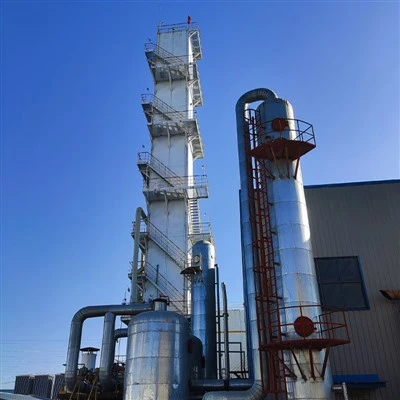
First off, let’s keep the basics simple: air separation is about pulling those three key gases out of the air we breathe, which is 78% nitrogen, 21% oxygen, and 1% argon. Every ASU does that, but the tech behind it changes everything for energy use, emissions, waste, and even noise. The big four ASU types you’ll run into are cryogenic distillation, pressure swing adsorption (PSA), vacuum pressure swing adsorption (VPSA), and membrane ASUs. I’m gonna skip the super jargon-heavy explanations but give you the real, environmental tea on each.
Starting with cryogenic distillation ASUs—these are the big boys for large-scale industrial use, like steel mills or big chemical plants. How they work, basically, is you chill air to insane temperatures (like -183°C for oxygen, way colder than a home freezer that’s like -18°C) until it turns to liquid, then you distill it like you’re making moonshine but for pure gases. Now, here’s the catch with cryo ASUs: they’re energy hogs. Like, I’m talking 0.2 to 0.4 kilowatt-hours (kWh) per cubic meter of oxygen produced. That’s way more than the other types, because you need massive compressors and refrigeration systems to get air that cold. For a 1000-ton-per-day steel plant, that adds up to millions of kWh a year—most of it coming from fossil fuel power grids, which means tons of CO2 emissions. I’ve had clients switch from cryo to VPSA specifically to cut their electricity bills, and not just because energy costs are high now; they’re also hitting strict emissions limits from the EPA and state regulators.
Wait, but cryo ASUs aren’t all bad—their big plus is that they produce super high-purity gases (99.999% or higher) in huge volumes, which is non-negotiable for things like semiconductor manufacturing or rocket fuel. But the environmental downside is huge. A 2022 study from the American Institute of Chemical Engineers (AIChE) found that cryogenic ASUs account for roughly 1% of global industrial energy use, which translates to about 0.3% of total global greenhouse gas emissions. That’s not a tiny number, and as the world pushes for net zero, a lot of large industrial players are scrambling to offset that. The good news? We supply cryo ASUs that can run on renewable-powered compressors now—if you have a solar or wind farm on-site, you can slash their emissions by 80% or more, no joke.
Next up, PSA ASUs. PSA stands for pressure swing adsorption, and this is the go-to for smaller-scale needs, like a local hospital that needs medical-grade oxygen, or a food packaging plant that uses nitrogen to keep chips fresh. How it works is simpler than cryo: you push air through chambers filled with adsorbent materials (think of it like tiny sponges that grab nitrogen molecules) at high pressure, so oxygen comes through, then you release the pressure to flush the nitrogen out and recharge the sponges.
Environmental impact? PSA way beats cryo on energy use—like, 0.15 to 0.25 kWh per cubic meter of oxygen. That’s almost half the energy of a cryo unit. No massive refrigeration needed, so less upfront cooling infrastructure. But here’s the thing: PSA ASUs max out at lower purity levels, usually 90-95% for oxygen, though you can get medical-grade (99%+) with extra steps. And because they cycle pressure nonstop, they do make a bit more noise than, say, a VPSA, which can be a nuisance if you’re putting the unit right next to an office or residential area. Also, the adsorbent material (zeolites, mostly) needs to be replaced every 5-10 years. When that material gets tossed, it’s non-biodegradable, and the mining for zeolites does have its own small environmental footprint—water use in mining, chemical processing. That’s a downside that a lot of small businesses don’t think about when they’re first looking at PSA units.
Then there’s VPSA, or vacuum pressure swing adsorption. This is basically a step up from PSA, and it’s become super popular for mid-sized industrial operations over the last 10 years. The only real difference is that instead of just releasing pressure to flush the adsorbent, you pull a vacuum too—so you don’t need as much high pressure, which cuts energy use even more. VPSA uses only 0.1 to 0.2 kWh per cubic meter of oxygen, which is almost 75% less than cryo, and a little less than regular PSA.
Environmental wins here are big. Lower energy use means lower CO2 emissions, obviously. The adsorbent life is also a bit longer, like 8-12 years, so less waste from replacement parts. And VPSA can hit higher purity levels than PSA—up to 99.5% for oxygen, which works for a lot of mid-sized manufacturing (like food and beverage, metal fabrication) that doesn’t need cryo-level purity. A lot of our clients that used to run cryo units for their mid-sized lines have switched to VPSA over the last five years, and their energy bills dropped by 40% on average, while their emissions went down by the same amount. The only real downside to VPSA is that it’s not built for super high volume—you’re maxing out at like 500 tons per day, whereas cryo can do thousands. So if you’re a huge plant, VPSA might not be enough, but it’s a no-brainer for anyone in the 50-500 ton range.
Last but not least, membrane ASUs. These are the new kids on the block, and they’ve been blowing up for really specific use cases over the last decade. How they work is, air is pushed through thin, selective polymer membranes—different gases pass through the membrane at different speeds, so oxygen, nitrogen, or argon gets separated. No pressure swings, no adsorbent material, no moving parts beyond a small compressor.
Environmental impact here is maybe the most underrated. Membrane units use super little energy—like 0.08 to 0.15 kWh per cubic meter, which is the lowest of all the types by far. No adsorbent to replace, so less waste. No cycling pressure, so they’re quieter too, like a standard HVAC unit, not a loud industrial machine. The catch? They only work for lower purity levels, usually 95% max for oxygen, and they’re not good for producing multiple gases at once. So if you need just one gas (like nitrogen for packaging, or oxygen for a small medical clinic), membrane ASUs are perfect. But if you need two or more gases, or super high purity, they’re not the way to go. Also, the membranes themselves are plastic, and while they last 10-15 years, when they do reach the end of their life, they’re not as recyclable as adsorbent materials, though manufacturers are working on that now. We’ve started supplying membrane units for small food processors and dental clinics, and their owners love them because they’re basically plug-and-play, no fancy maintenance, and their energy costs are almost negligible compared to older units.
Now, I get it—for a lot of business owners, the first thing you care about is cost, not just “environmental stuff.” But the two are tied together now. Energy prices have been all over the place since 2020, and a lot of states are adding carbon taxes or emissions fees for industrial users. So choosing the right ASU isn’t just good for the planet, it’s good for your wallet too. Let’s do a quick real-world example: a food packaging plant that uses 10,000 cubic meters of nitrogen a day. If they go with a cryo ASU, they’re looking at ~35,000 kWh a day, which at $0.10 per kWh is $1,277 a day, or ~$466,000 a year. If they go with VPSA, that’s ~18,000 kWh a day, $657 a day, or ~$240,000 a year. That’s a $226,000 a year savings, and their CO2 emissions drop by ~160 tons a year (assuming grid average emissions of 0.45 tons CO2 per MWh). That’s not just a green win—it’s money back in your pocket.
But wait, there’s more to environmental impact than just energy. Let’s talk about water use. Cryogenic ASUs use a lot of water for cooling the compressors and refrigeration systems—like 100-200 liters per minute for a 1000-ton-per-day unit. That’s a big deal in drought-prone areas, like California or Texas. PSA and VPSA units use way less water, more like 10-50 liters per minute, and membrane units use almost no water at all, because they don’t need the massive cooling loops. That’s a huge point for plants in regions where water is scarce or expensive.
Also, waste from maintenance. Cryo ASUs need constant upkeep on their compressors and refrigeration units—oil changes, part replacements, and those old refrigerant fluids (like CFCs, though most are phased out now) are potent greenhouse gases if they leak. PSA and VPSA use adsorbents that need replacement, but those are usually just minerals that can be sent to a landfill, though some recyclers are starting to process them. Membrane units have basically no maintenance, just occasional filter changes, so way less waste.
Another big one: fugitive emissions. That’s the gas that leaks out of the unit when it’s being produced or transported. Cryo ASUs handle super cold liquid gases, so there’s a higher chance of leaks from pipes and valves, which are mostly nitrogen and oxygen, but wait—nitrous oxide (a greenhouse gas 300x more potent than CO2) can be a byproduct if the refrigeration system has old parts. PSA and VPSA have fewer moving parts, so less chance of leaks, and membrane units have the least, since there’s no high-pressure cycles that can wear on pipes.
Now, I don’t want to make it sound like there’s a “perfect” ASU for every business. That’s why we work with every type—cryo, PSA, VPSA, membrane. When a client comes to us, we don’t just push the most expensive unit or the one with the biggest margin. We sit down with them, figure out their volume needs, required purity levels, energy costs in their area, even local regulations on emissions and water use, and help them pick the one that hits all their goals. A 50-person manufacturing plant that needs medical-grade oxygen for its on-site clinic? A membrane or PSA unit is ideal. A mid-sized metal fabrication plant that needs 99.5% purity oxygen for cutting? VPSA is the way to go. A 10,000-ton-per-day chemical plant that needs super high-purity oxygen and nitrogen? Yeah, cryo is still your only option, but we can modify it to run on renewable energy to cut its footprint.
I’ve seen too many businesses just go with whatever ASU their old supplier recommended 10 years ago, without considering how much things have changed. The energy market is volatile, emissions rules are getting tighter every year, and customers are actually asking for more sustainable practices from their suppliers now. If you’re still running a cryo unit that was installed in 2010, chances are you’re wasting a ton of money on energy and paying way more in emissions fees than you need to.
Look, we’re not here to lecture anyone about being “eco-friendly.” We’re here to help you save money, stay compliant with the law, and keep your business running smoothly. If you’re in the market for a new ASU, or you’re thinking about upgrading your old one, we can walk you through the environmental impacts of every type, run the numbers on energy use and emissions for your specific operation, and help you find the best fit. No pressure, no jargon, just straight talk about what works for your business and the planet.
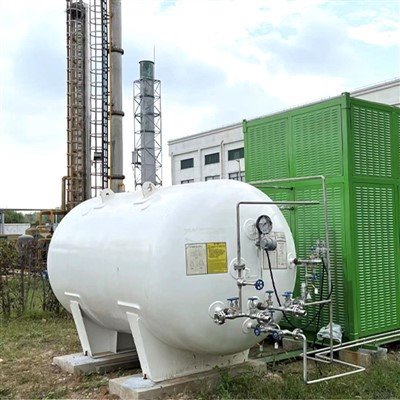
At the end of the day, choosing an ASU is a big decision, but it doesn’t have to be complicated. Understanding the environmental impacts of each type is just part of making a choice that works for your bottom line, your team, and the world. If you’re ready to chat through what ASU type is right for you, just reach out—we’re here to help.
Combustion Gas Capture Device References
American Institute of Chemical Engineers. (2022). Industrial Energy Use and Greenhouse Gas Emissions from Air Separation Technologies. AIChE Journal.
U.S. Environmental Protection Agency. (2021). Industrial Emissions Reduction Strategies for Gas Separation Systems. EPA Office of Air and Radiation.
International Energy Agency. (2023). The Future of Industrial Air Separation: Energy Efficiency and Low-Carbon Pathways. IEA Industry Report.
Xinxiang Jiale Intelligent Equipment Co., Ltd.
As one of the most professional air separation unit manufacturers and suppliers in China, we’re featured by quality products and good service. Please rest assured to buy durable air separation unit for sale here from our factory. We also accept customized orders.
Address: No.3913, 9th Floor, Unit 3, East Commercial and Office Complex, Baolong City Plaza, Hongqi District, Xinxiang City, Henan Province, China
E-mail: cc2397410@gmail.com
WebSite: https://www.jiale-asu.com/
