Hey there, if you’re a store owner, display tech, or just someone who works with Deadbolt display stands, you know how frustrating it is when a lock part, shelf bracket, or adjustment arm goes kaput. No one wants to waste time guessing what replacement part fits their stand—you end up ordering the wrong thing, waiting for a refund, and falling behind on your restock or setup schedule. As a supplier who’s been fielding these exact calls for over a decade, I’ve seen so many people mess up measurements just because they skip a few small, key steps. Today, I’m breaking down exactly how to measure your Deadbolt display stand for replacement parts, so you get the right part on the first try. Deadbolt Display Stand
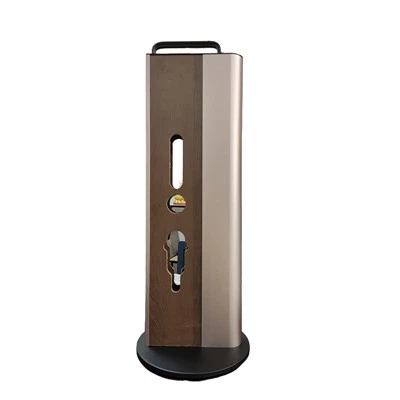
First, let’s get one thing straight: Deadbolt stands aren’t one-size-fits-all, even if they look similar at first glance. That sleek, wall-mounted stand for a 55-inch TV isn’t going to work for a smaller tabletop display, and the lock cylinder that fits a retail phone stand won’t fit a kiosk monitor stand. The biggest mistake I see customers make is measuring the wrong surface, or guessing dimensions instead of double-checking. Let’s start with the basics: what parts do you usually need to replace? Most of the time it’s the deadbolt lock assembly, adjustable arms, shelf brackets, or base feet. Each of these needs a different set of measurements, so I’ll walk through the most common parts first.
Let’s start with the deadbolt lock itself—this is the part that actually locks the display in place, so it’s the most common replacement part customers ask for. When measuring a Deadbolt lock, there are two key measurements you can’t skip: the cylinder length and the mounting hole spacing. Wait, no—wait, actually, first you need to check if your stand uses a surface-mounted lock or a flush-mounted one. Surface-mounted locks stick out from the back of the stand’s mounting plate, while flush-mounted ones sit inside a cutout. That’s a quick first check to make sure you’re ordering the right type. Now, for the cylinder length: hold a tape measure from the very back of the cylinder (where it faces the display) to the end of the locking bolt (where it attaches to the stand or the display). Don’t just measure the part that’s visible—some people stop at the point where it hits the plate, but that’s wrong. For example, if your visible cylinder is 1.5 inches, but the back part that attaches to the stand is another 0.5 inches, you’ll end up with a cylinder that’s too short to hold the display tight. Next, mounting hole spacing: that’s the distance between the two screw holes that hold the lock to the stand plate. Measure from the center of one hole to the center of the other, not the edges of the holes. Deadbolt locks usually have either 2 inches or 3 inches of spacing, but some custom stands have odd sizes, so don’t assume. If your old lock is still intact, you can double-check by removing one screw and sliding the new lock’s holes to match—if it lines up, you’re good. If you can’t remove the old lock (say, you lost the key and can’t take it apart), measure the cutout in the plate where the lock sits. The cutout for a 2-inch spacing is usually 2.25 inches wide, but again, confirm.
Next up: adjustable arms and pivot joints. These are the parts that let you tilt, swivel, or extend your display, and they’re prone to wear from regular use—especially in busy retail stores where someone’s yanking on the stand to show off a product. The big mistake here is measuring the arm’s total length, but you also need to measure the diameter of the mounting ends. Let’s break it down. First, identify the joint: most Deadbolt stands use either a ball-joint, a clamp joint, or a hinge joint. For ball joints, the diameter of the ball (the round part that fits into the socket) is non-negotiable. If your ball is 1 inch in diameter, a 1.25-inch ball won’t fit—no matter how close the arm length is. To measure the ball, wrap a soft measuring tape around the widest part of the ball, then divide that number by pi (3.14) to get the diameter, or just use a digital caliper if you have one—way more accurate. For clamp joints, measure the inner diameter of the clamp’s opening where it attaches to the display or the stand. That’s usually either 1 inch, 1.5 inches, or 2 inches, and if it’s slightly worn from use, measure the inner gap when the clamp is fully tightened, not loose. For arm length, measure from the center of the mounting hole on one end to the center of the mounting hole on the other end, not the total length of the metal bar. A lot of stands have arms with built-in mounting holes for accessories like cameras or cables, so those holes don’t count towards the length. Another pro tip: if your arm has a ratchet or tension knob, check the size of the screw that holds the tension knob in place. Deadbolt arms use either M6 or M8 screws, so if your old tension knob is stripped, that’s another measurement you can use to confirm the right arm.
Then we have base feet and stabilizing bars—these are the parts that keep your stand from tipping over, especially if it’s holding a heavy display like a monitor or a large TV. I’ve had customers order replacement feet that are the same length, but they still tip over because they measured the wrong part of the foot. Here’s how to measure correctly: for base feet that attach to the bottom of the stand’s pole, measure the diameter of the pole (where the foot slides over it) or the size of the screw that holds the foot in place. Most Deadbolt stand poles are 1.5 inches or 2 inches in diameter, so if your old foot fits a 1.5-inch pole, don’t order a 2-inch one. For stabilizing bars (the bars that go from the base to the wall to keep the stand anchored), measure the length of the bar between the two mounting points: one at the base, one at the wall. Also, measure the diameter of the bar, because some stands use thinner bars for smaller displays and thicker ones for heavier ones. If you’re replacing a base that’s part of a freestanding stand, measure the base’s footprint—the total length and width of the base on the floor. A base that’s 12×12 inches works for a 32-inch TV, but a 55-inch TV needs a base that’s at least 16×16 inches, so getting the footprint right means you don’t have to re-drill holes in your store’s floor or counter.
Wait, what if your stand is a custom build, or you can’t find the old model number? That’s super common, especially for stands that are a few years old. Model numbers are usually on a sticker on the back of the stand or the bottom of the base, but if that’s faded or peeled off, don’t panic. I’ve had customers send me photos of their stand and a few measurements, and we’ve matched the right part every time. The extra measurements you need here are the display’s VESA pattern—wait, hold on, VESA is important for displays that mount to stands, right? Wait, no, let’s clarify: VESA is the standard for the mounting holes on the back of your display, not the stand, but if your stand is compatible with VESA, that’s a key check. If you’re replacing the stand’s mounting plate (the part that attaches to the display), you need to measure the VESA hole spacing. That’s the distance between the four holes on the back of your TV or monitor: measure horizontally between the two top holes, and vertically between the two side holes. Common VESA sizes are 100×100 mm, 200×200 mm, and 400×400 mm, but there are smaller ones too. If your display has a different VESA size, the mounting plate on your stand might be adjustable, but if you’re replacing that plate, you need the exact measurements.
Now, let’s talk about tools—you don’t need fancy stuff, but a few basic tools will save you a lot of hassle. A standard tape measure (the soft kind for curves is good for balls), a digital caliper if you have one (way more accurate for small diameters), a pencil to mark holes if you’re removing parts, and if you can, a photo of the old part next to a ruler. Photos are huge—when customers send a clear photo of the old lock or arm next to a tape measure, I can tell exactly what size it is without them having to guess. Avoid using a yardstick or a rough estimate from memory—one customer told me his arm was 12 inches, but it was actually 12.5 inches, and he ended up with an arm that was too short to reach the wall mount. So take the extra 30 seconds to measure twice—I always tell my customers “measure twice, order once” because returns for wrong parts are a waste of time for both of us.
Now, let’s go through a quick example to make this concrete. Let’s say you have a retail phone stand, and the deadbolt lock that holds the iPhone in place is broken. First, check if it’s surface or flush mounted: if you pop the back of the stand, the lock is sticking out, so it’s surface. Next, measure the cylinder length: from the back of the cylinder to the end of the bolt, that’s 1.25 inches. Then measure the mounting holes: center to center is 1.5 inches. Also, check the VESA pattern of the iPhone? Wait, no, for a phone stand, the mounting plate is usually small, so the hole spacing is 1.5 inches. You send that info to us, and we can hook you up with the right replacement lock. Another example: a 43-inch TV stand at a trade show. The adjustable arm is bent, so you need a new one. First, identify the ball joint on the arm: measure the ball, it’s 1.5 inches in diameter. Then measure the arm length from center of one mounting hole to the other: 18 inches. Then the inner diameter of the clamp that attaches to the TV mount: 2 inches. That’s all we need to get you the right arm.
Wait, what about if the part is no longer made? A lot of older Deadbolt stands have parts that are discontinued, but we still keep a lot of legacy parts in stock because we know how hard it is to find replacements. That’s why we tell customers to send any measurements or photos they have, even if they think the part is rare. We’ve matched parts for stands that are 10+ years old before, so don’t give up if you can’t find the model number.
Now, a few common mistakes to avoid, because I see these every single week. First, don’t measure the external edge of a part—like, for a lock, don’t measure the total height of the lock plate, measure the hole spacing. For a ball joint, don’t measure the socket, measure the ball itself. Second, don’t assume all Deadbolt stands use the same parts—even if two stands look identical, they might have different lock sizes, especially if they’re from different production runs. We’ve had customers buy two stands at the same time, and the locks are different sizes, so they can’t use the same replacement part. Third, don’t skip checking the weight capacity. If your stand is rated for a 50-pound display, don’t buy a replacement arm that’s only rated for 25 pounds—that’s a safety hazard, and it will break again. Always check the weight rating of the new part against the weight of your display, and match that.
At the end of the day, the goal is to get a replacement part that fits perfectly, works right, and doesn’t require drilling new holes or modifying your stand. If you’re unsure about any measurement, or you need help identifying the right part, don’t hesitate to reach out to our team. We’ve got over a decade of experience with Deadbolt display stands, and we can help you confirm measurements, match parts, or even walk you through installation if you need it. No guesswork, no wrong parts, just a smooth process to get your stand back up and running.

If you’ve got a broken Deadbolt display stand part and you’re ready to stop guessing, shoot us a message or give our team a holler. We’ll make sure you get the exact replacement you need, so you can get back to what matters—showing off your products, setting up your space, and not dealing with extra headaches.
Door Lock Demo Stand References:
- Display Industry Association. (2022) Standard Guidelines for Display Stand Replacement Part Measurements. Retail Display Equipment Association
- Deadbolt Display Parts Technical Manual. (2019) Legacy Part Matching for Freestanding and Wall-Mounted Stands. Deadbolt Supply Co. Internal Documentation
- Consumer Product Safety Commission. (2021) Safety Standards for Display Stand Weight Capacity and Stability. U.S. CPSC Office of Technology.
Zhongshan Tangzhina Handicraft Products Co., Ltd.
We are one of the most reliable deadbolt display stand manufacturers and suppliers in China, specialized in providing high quality customized products. We warmly welcome you to wholesale durable deadbolt display stand in stock here from our factory. For quotation, contact us now.
Address: No. 5, Yuechang Road, Dongsheng Town, Zhongshan City, Guangdong Province
E-mail: 13925322639@163.com
WebSite: https://www.tangzhina.com/
