If you’re in the molds and dies game, you know how much a tiny misstep can sink a whole project. Last quarter, we had a client who spent 3 weeks hand-fixing a mold base for a car part—they were working 12-hour shifts, and by the time they got it right, their production window for the customer had shrunk by 20%. That’s where engraving and milling machines come in, and we’ve seen first-hand how they turn that chaotic, error-prone process into something smooth, predictable, and fast. Engraving and Milling Machine
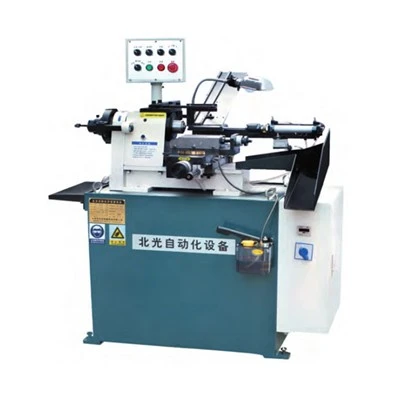
Let’s start with the basics, no boring jargon. Molds and dies are the backbone of so many industries: plastic parts for phones, metal stamping for appliances, even die-cast parts for construction equipment. A mold is the cavity you fill with molten material to make a part, and a die is the tool that cuts or shapes metal into something like a car door panel. Both need to be precise—like, within 0.005mm precise. If that’s off, the part doesn’t fit, it warps, or it cracks when it’s mass-produced. For a long time, shops used separate machines for this work: a regular mill for the big, rough cuts, and a separate engraving machine for the fine details, like logos or tiny undercuts. That meant moving the part between machines, re-clamping it, checking alignment every time—room for human error, extra time, extra cost.
Engraving and milling machines (sometimes called E&M machines for short, we’ll use that) fix that by combining both jobs into one unit. They’ve got high-speed spindles that can spin a cutting tool up to 20,000 RPM—faster than most regular mills—so they carve fine details cleanly without chipping the hard metal or carbide molds. They also have tighter tolerance control; our machines, for example, use linear guides instead of the older recirculating ball screws, so there’s almost no “backlash”—the tiny gap that makes cuts slightly off. That’s a game-changer for shops that make small-batch, high-precision dies, like custom mold makers for medical devices. A client in the Midwest uses our E&M machine to make injection molds for insulin pen parts—each mold has 12 cavities, and the difference between cavity 1 and cavity 12 has to be less than 0.01mm. They tried a regular mill first and had to scrap 3 molds before getting it right; with the E&M, they got the perfect cut on the first try.
Now, let’s talk about who these machines are for, because not every shop needs one. If you’re running a low-volume shop that makes simple molds for hobbyists or small appliances, a regular mill might still work. But if you’re doing high-volume production, or making parts with complex details—like a mold for a smartphone case with a textured surface, or a die for a metal gear with 100 tiny teeth—you need the speed and precision of an E&M. We’ve also seen them work wonders for prototyping. A startup making electric bike components used to outsource their die prototypes, which took 10 days and cost $1,500 each. They bought our E&M machine, and now they make their own prototypes in 2 days for $300. That kind of turnaround lets them test designs faster, get to market sooner, and cut costs big time.
Wait, but there’s a common myth out there: E&M machines are only for small, delicate parts. Nope. We supply machines that handle parts up to 1,500mm in size, perfect for large dies for car body panels. The key is choosing the right spindle size and worktable for your needs. Some E&M machines have rigid beds for heavy metal cutting, while others are lighter for small, detailed engraving on brass or aluminum. It’s not one-size-fits-all, and that’s why we don’t push the same machine on every client—we take the time to ask what they’re making, their production volume, and their budget.
We also see a lot of shops struggle with machine uptime. Nothing kills a production schedule like a machine that breaks down mid-job. That’s why our E&M machines use components from top brands—like Siemens controls and FANUC motors—and we offer 24/7 tech support, not just 9-to-5. Last month, a client in Texas had a spindle issue on a Friday night, right before a big production run. Our techs hopped on a video call, walked them through a quick fix, and they were back running in an hour. That’s the kind of support that matters, not just selling a machine and disappearing.
Another thing to consider is software compatibility. A lot of mold shops use CAD/CAM software like Mastercam or SolidWorks, and not all E&M machines play nice with those. Our machines are pre-programmed to import files from all the common CAD/CAM tools, so you don’t have to waste time converting files or dealing with errors. We also offer training—we don’t just drop a machine in your shop and say “good luck.” Our team will come in, train your operators on how to set up jobs, adjust speeds, and maintain the machine, so you’re getting the most out of it.
Let’s talk numbers, because that’s what matters to most shop owners. A mid-range E&M machine costs around $50,000 to $80,000, depending on features. Compare that to outsourcing mold work, which can cost $10,000-$20,000 per mold and take weeks. We had a client in Ohio that used to outsource 80% of their die work. They bought two of our E&M machines, and within a year, they cut their outsourcing costs by 60% and increased their profit margin by 25%. Sure, there’s a upfront cost, but the ROI usually hits in 12 to 18 months—sometimes even faster if you’re doing high-volume work.
Now, let’s get real about some of the pain points we hear from clients. One big one is tooling costs. E&M machines use small cutting tools, and they wear out faster than tools for regular mills. But there are ways to cut that cost—using coated tools (like titanium nitride) that last longer, and properly maintaining the spindle to reduce wear. We offer discounts on tooling for our clients, and we’ve got a team that can help optimize your cutting paths to extend tool life. Another pain point is operator training. A lot of older mill operators don’t know how to use the high-speed spindles or the precision controls on E&M machines. That’s why our training program is hands-on, not just a 2-hour webinar. We let your operators run test jobs on our floor before they take the machine back to your shop, so they feel confident.
We also love seeing small shops grow with E&M machines. A few years back, we worked with a 3-person mold shop in Michigan that was making small plastic molds for local businesses. They were barely keeping up with orders, and couldn’t take on big clients because they couldn’t produce the precision needed. They bought our entry-level E&M machine, and now they work with a major medical device company, doing high-precision molds for surgical tools. They hired two more employees, and their revenue tripled in 2 years. That’s the kind of impact we love—helping small shops compete with bigger ones without breaking the bank.
So, when is the right time to upgrade to an engraving and milling machine? If you’re spending more than 20% of your time fixing errors from your regular mill, or if you’re losing clients because you can’t meet tight deadlines for precision parts, it’s probably time. If you’re outsourcing a lot of your die or mold work, that’s another sign. Even if you’re a small shop, there’s an E&M machine that fits your needs and budget.
At the end of the day, molds and dies are all about precision, speed, and reliability. A bad machine can mess up your parts, delay your orders, and cost you money. A good engraving and milling machine? It becomes a workhorse that lets you take on bigger jobs, make more parts, and keep your clients happy. We’re not just selling machines—we’re helping shops do their job better, faster, and more profitably.
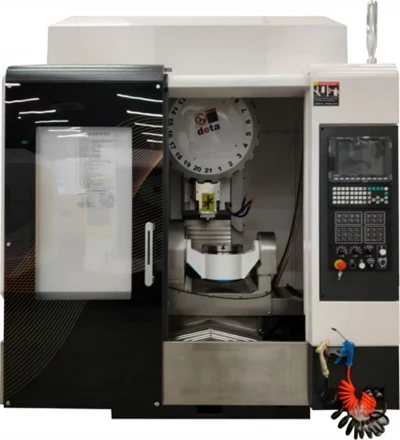
If you’re curious about what an E&M machine can do for your shop, we’d love to chat. Tell us what you’re making, how many jobs you do a month, and what your biggest pain points are, and we’ll walk you through the best options for your budget. No sales pitches, no confusing jargon—just straight talk about what works for mold and die shops.
CNC Machining Center References:
- Modern Machine Shop. (2022). "Engraving and Milling: The Fusion That’s Changing Moldmaking."
- SME. (2021). "Precision Machining for Molds and Dies: Trends in High-Speed Spindles and Linear Guides."
- Gardner, J. (2023). "ROI Analysis for Engraving and Milling Machines in Small to Medium Sized Fabrication Shops." Journal of Manufacturing Processes.
- VDI 3402. (2020). "Requirements for High-Precision Machining Centers for Molds and Dies." Association of German Engineers.
- Cutwel Tooling. (2022). "Optimizing Tool Life for High-Speed Engraving and Milling Applications." Industrial Machining Journal.
Taizhou Qiyang Trading Co., Ltd.
As one of the most professional engraving and milling machine manufacturers and suppliers in China, we’re featured by quality products and good price. Please rest assured to buy bulk engraving and milling machine for sale here and get quotation from our factory. Customized orders are welcome.
Address: Zhenhai Village, Binhai Town, Wenling City, Taizhou City, Zhejiang Province
E-mail: qycncmachine@outlook.com
WebSite: https://www.qycncmachine.com/
