Hey there, if you’ve ever ordered a custom metal or plastic part for a project—whether it’s a drone component for a hobby build, a precision bracket for a medical device, or a prototype for a startup—you’ve probably heard the phrase “machining finish grade” tossed around. At my shop, a by machining supplier, this is the stuff we talk about every single day, because the finish doesn’t just make a part look good—it makes it work. Skip the boring textbook stuff, let’s break down what the different grades actually mean, what you need to know for your next job, and why nailing the right one can save you headaches (and cash) down the line. By Machining
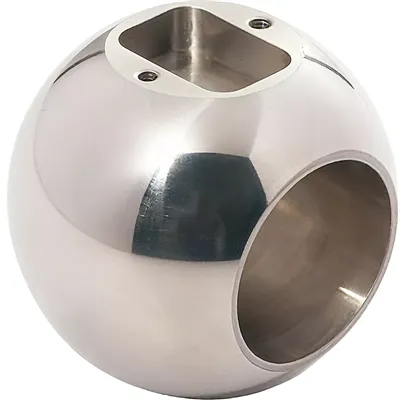
First, let’s get one thing straight: machining finish grades aren’t one-size-fits-all. They’re tied directly to the process you use, the material, and what the part’s gonna do. When we’re talking machining, that’s everything from roughing cuts to fine, last-pass passes that leave a smooth surface. A lot of new buyers mix up “tolerance” and “finish”—tolerance is how close a part is to its exact measurements, finish is the texture on the surface (like how bumpy or smooth it is). Important distinction, because if you want a part that fits perfectly, you care about both, but finish is all about the look and function of the surface itself.
Let’s start with the lowest grade, shall we? That’s called Rough Machined Finish. This is the stuff we pull off when we’re hacking away at a big block of material to get it close to the final shape—like turning a 6-inch aluminum billet into a 5-inch rough cylinder that still has way more material than needed. The surface here is pretty ragged, right? Think of it like wood that’s been roughly planed by a beginner, or even a rough-cut tree trunk. The Ra value (that’s the standard unit for surface roughness, measured in microinches or micrometers) for rough finishes is usually between 125 and 500 Ra. For reference, 1 Ra is super smooth, so 125 is still pretty bumpy. We only use this grade when the part’s gonna get another process after machining—like forging, grinding, or sandblasting—or when you just need a rough blank that you’re gonna modify yourself. If you’re a hobbyist prototyping a part and you don’t care about surface smoothness, this is the cheap, fast option, but don’t expect it to look polished.
Next up, Semi-Finish Machined Finish. This is the middle ground. After we do the rough cut, we take a lighter, more precise pass to clean up the rough edges, get rid of those big ridges, and get the part way closer to its final size. Ra here is around 32 to 125. This is super common for parts that need to hold their shape but don’t need a silky-smooth surface—like brackets for framing, housing for small electronics, or low-stress mechanical parts. It’s faster and cheaper than a full finish, so if you’ve got a project where the surface doesn’t need to be touching anything or look nice, this is a solid go-to. I had a customer last year making custom ATV frame brackets, and they went with semi-finish because they were gonna powder coat them anyway—so the rough texture didn’t matter once the paint went on. Worked like a charm.
Now we get to Finished Machined Finish, the grade most people mean when they talk about a “nice” machined part. This is when we do those light, fine passes, often with sharp tools set to minimal depth, to get rid of all the semi-finish imperfections. Ra here ranges from 16 down to 32 microinches (or like 0.4 to 0.8 micrometers, if you use metric). This surface is smooth to the touch—you’d run your hand over it and not feel those tiny ridges. Great for parts that move against each other, like bearing housings, gear teeth, or engine components that need to reduce friction. We also use this for parts that need to look good without extra finishing—like custom logo plaques or small decorative parts. Last month, a local woodworking shop ordered custom brass knob bases for their high-end cabinets, and they wanted them finished so they could polish them a tiny bit after, not have to do heavy work on the surface. Finished grade was exactly what they needed.
Wait, hold on—there’s a step above that, right? It’s called Precision Machined Finish, sometimes called Super Finish. This is for when you need that next level of smoothness, almost mirror-like. Ra here is 8 microinches and below—we’re talking 2, 4, 8 Ra, depending on the job. How do we get this? We use high-precision CNC machines, super sharp cutting tools, sometimes even multiple passes with different tool types, and for really tight jobs, we might do a little light polishing after the final cut. This grade is non-negotiable for high-stress, high-precision parts: aerospace components, medical implants (like hip stems that touch bone), high-performance engine parts (crankshafts, piston heads), and optical parts that need to reflect light perfectly. I worked on a medical device project a while back for a company making implantable sensors, and their finish requirement was 2 Ra—so smooth you could barely tell it was machined. If we’d even been a little off, the sensor would’ve had friction issues, or the body might’ve reacted to the rough surface. Precision finish isn’t cheap, and it takes more time, but when you need parts that are gonna hold up to extreme conditions, it’s worth every penny.
Wait, there’s a caveat here—different materials react differently to finish grades. You can’t get the same Ra on aluminum as you can on titanium or plastic. For example, soft plastics like ABS tend to get smooth faster because they don’t dull cutting tools as quick, so you can hit a 16 Ra finish on them pretty easily. Titanium is way harder, so you need sharper tools and slower speeds to get that same smoothness—takes longer, costs more. Even aluminum, if it’s milled vs. turned, will have different finishes. Milling leaves tiny tool marks in lines, while turning leaves circular lines, so if you’re planning to polish it those lines will show unless you do extra work. That’s something every customer should know—don’t show up asking for a mirror finish on titanium without realizing it’s gonna cost 2x a standard aluminum part.
Also, process-specific finishes matter. Like, if you use a CNC mill vs. a CNC lathe vs. a manual mill, you’ll get different finishes. Manual machining is cheaper for small batches, but the finish will be a little more inconsistent, because it’s all operator-dependent. CNC is way more consistent—every part coming off the same machine will have the same finish. A lot of our customers don’t realize that, so when they order 100 parts and want every single one to look identical, we recommend CNC for the finish consistency.
Now, let’s talk about when you’d pick which grade. Let’s say you’re making a prototype for a new product—you don’t need a precision finish, you just need it to fit. Semi-finish is perfect, it’s fast and cheap, you can test the design without dropping a ton of cash. If you’re doing a final production run for parts that go in a everyday appliance, finished grade is great—looks good, works well, not too pricy. If you’re making parts for a race car, or a medical implant, or something that has to perform under pressure, precision finish is non-negotiable.
I get it, a lot of people look at these grades and think “the smoother the better, right?” No, not always. If you have a part that’s gonna be blasted with dirt or debris, a super smooth surface might get scratched easier, or if it’s a housing, the smooth texture might make it slippery to hold. If you’re machining a part that’s gonna be welded to another piece, a rough semi-finish is actually better because welds stick better to a slightly textured surface. You don’t want to waste money on a precision mirror finish if your part’s gonna get painted, or welded, or covered by another component. It’s all about matching the finish to the job.
At my shop, we deal with this every single day. A customer will call and say “I need a machined part,” and the first question I ask is “what’s it gonna do?” Because that tells me exactly what finish grade we need, how much time it’ll take, and how much it’ll cost. Last week, a guy came in wanting a custom mount for his off-road light bar—he thought he needed a super smooth finish, but turns out the mount was gonna get bolted to the front of his truck, get covered in mud and rocks, and he was powder coating it anyway. So we did a semi-finish, knocked 30% off his cost, and he was stoked because he didn’t need that mirror polish he thought he did.
If you’re new to machining, or if you’ve ordered parts before and been confused why your finish wasn’t what you expected, don’t overcomplicate it. The key is to communicate what the part’s function is, what your budget is, and what your timeline is. We can adjust—if you need a slightly smoother semi-finish, no problem, it’s not as much as a full finish. If you need a cheaper rough blank, that’s easy too. A lot of by machining customers get stuck thinking they have to pay for the highest grade, but most of the time, a middle grade works just fine.
Now, if you’ve got a project coming up—whether it’s a small prototype, a production run of 10,000 parts, a custom decorative piece, or a high-stress mechanical component—we can walk you through exactly what finish grade makes sense for your needs. No jargon, no hidden fees, just honest advice and quality machining. Hit us up to chat through your requirements, and we’ll get you a quote that works for you.
By Spray References:
- Machining Data Handbook, 4th Edition, Society of Manufacturing Engineers, 2020
- Surface Roughness Parameters and Their Applications, International Journal of Machine Tools and Manufacture, Vol. 50, No. 1, 2010
- Metal Finishing Guidebook, 2022 Edition, National Association for Surface Finishing
Zhejiang Jigong Valve Co., Ltd.
Address: Dongou Industrial Park, Oubei Subdistrict, Yongjia County, Wenzhou City, Zhejiang Province (within Zhejiang Yinhe Machinery Manufacturing Co., Ltd.)
E-mail: Sales@cnzjsk.com.cn
WebSite: https://www.ball-china.com/
