If you’ve ever worked with flow instruments—whether you’re a plant manager, a process engineer, or someone who sources industrial gear to keep operations smooth—you know they’re only half as useful if they can’t “talk” to your other equipment. Back in the day, most flow sensors, transmitters, and meters worked in silos: they spit out a raw number on a display, and that was it. Now, though, every new flow instrument I sell as a flow instruments vendor comes with built-in communication protocols, because nobody wants to manually log flow rates all shift long. These protocols might sound like jargon, but they’re just the set of rules that let your flow device share data with your PLC, SCADA system, or even a mobile app. Over the years, I’ve seen buyers get stuck picking the wrong protocol for their setup—so let me break down the most common ones, what they’re used for, and when to go with each. Flow Instruments

First up, Modbus. This is the old workhorse of industrial comms, and it’s still everywhere for good reason. It’s simple, open-source (meaning no hidden licensing fees), and it works over both wired and wireless connections—RS-485 for long wired runs, or Modbus RTU over radio for shorter wireless hops. Most basic flow meters, like our turbine or vortex models, ship with Modbus out of the box. Let’s be real: if you run a small food processing plant or a mid-sized water treatment facility, you don’t need a fancy, overcomplicated protocol. Modbus lets you pull real-time flow rate, totalized volume, and diagnostic data (like a clogged sensor alert) straight into your control room laptop. The only catch? It’s a little slow for large datasets, and it can only talk to one device per message if you stick to the basic version. That said, 80% of the flow instruments I supply to small to mid-sized operations use Modbus, and I always recommend it for buyers who want to avoid setup headaches.
Next, HART. A lot of folks mix up HART and Modbus, but they’re pretty different. HART was designed as a bridge between old 4-20mA analog signals (the legacy standard that’s been around since the 1950s) and digital comms. If you’re retrofitting an old plant with a new flow transmitter, HART is perfect. It rides on top of the same two wires you already use for 4-20mA, so you don’t have to rewire your whole system. You get the best of both worlds: a constant analog signal for basic control, plus digital data for things like calibration history, sensor health, and even remote configuration. That’s why HART is super popular in oil and gas refineries, where safety is non-negotiable and you need to double-check every reading. The downside? It’s a bit slower than Modbus, and you’ll need a HART modem or a compatible PLC to pull the digital data. When we supply HART-enabled flow instruments, I always remind buyers to make sure their control system has a HART interface—otherwise, they’re only getting the basic 4-20mA reading, and missing all the extra diagnostic stuff that prevents downtime.
Then there’s FOUNDATION Fieldbus, or FF. This is the heavy-duty player for large, complex process plants—think big chemical facilities or power generation stations. Unlike Modbus or HART, which let you connect a handful of devices, FF is designed for networks with dozens or even hundreds of instruments. It’s fully digital, so it can share way more data (like flow rate, pressure, temperature, and device status) all at once, and it supports advanced features like peer-to-peer communication, meaning two flow instruments can talk directly to each other without going through a central controller. That’s a game-changer for plants where a flow spike in one line needs to trigger an adjustment in another line in real time. The catch? FF is way more expensive to set up. You need specialized hardware for your control system, and configuring the network takes a lot more time and expertise. I only recommend FF for buyers who have a large plant with multiple process loops—most of the flow instruments we sell for big facilities have FF as an option, but I don’t push it if they don’t have the infrastructure to use it.
If wireless is more your speed, you can’t go long without mentioning WirelessHART. This is exactly what it sounds like: HART, but without the wires. It was developed specifically for industrial environments, so it’s built to cut through interference from machinery, and it uses self-healing mesh networking—if one node goes down, the signal reroutes through another. That’s huge for places where running wires is impossible or too expensive, like remote pipeline monitoring or outdoor water tank systems. I’ve supplied WirelessHART flow meters to a few municipal utilities that have to track flow across miles of pipelines, and it works way better than trying to string cables through uneven terrain. The downside? It has a shorter range than wired protocols, and you have to worry about battery life if your instruments are running on wireless power. Still, it’s been a lifesaver for buyers who don’t want to deal with wiring headaches.
One protocol that’s been growing a lot lately is Profibus. It’s similar to Modbus in simplicity, but it’s faster and more reliable, especially for high-speed control applications. It’s super common in manufacturing, like packaging lines or automotive plants, where you need to track small, precise flow rates for ingredients or lubricants. Unlike Modbus, which is often used for individual devices, Profibus networks can support up to 126 devices, making it great for small to mid-sized production lines. Our Coriolis flow instruments, which are used for very precise flow measurement, often come with Profibus because the fast data transfer means you don’t get lag between the sensor and the control system. The downside is that it’s not quite as universal as Modbus or HART—if your facility already uses a Siemens PLC, Profibus is a no-brainer, but if you have an Allen-Bradley system, you might want to stick with something more compatible.
And let’s not forget about Ethernet/IP. This is the protocol that brings flow instruments into the modern industrial internet of things (IIoT) space. It uses standard Ethernet, so you can connect your flow meter straight to your office network, pull data into cloud dashboards, or even check on your flow rates from a phone while you’re at home. A lot of the flow instruments we supply for IIoT-enabled facilities have Ethernet/IP built in, because it lets you track trends over time—like how flow rates change with temperature, or when a sensor is starting to drift out of calibration. That’s great for predictive maintenance: instead of waiting for a sensor to fail, you can get an alert when its diagnostic data shows it’s time to calibrate. The only thing to watch out for here is cybersecurity. Since you’re connecting to a network that’s accessible from outside the plant, you need to make sure your Ethernet/IP setup has proper security measures, like firewalls and encryption. I always advise buyers to talk to their IT team before going with Ethernet/IP, because it’s not just a plug-and-play setup.
Wait, there are a couple more niche ones that are worth mentioning, depending on your use case. For example, Modbus TCP is the Ethernet version of Modbus—so if you like the simplicity of Modbus but want wireless Ethernet connectivity, Modbus TCP is the way to go. It’s way cheaper than Ethernet/IP for small setups, and it works with most standard Ethernet hardware. Then there’s DeviceNet, which is a simpler version of Profibus, mostly used for small manufacturing cells with a handful of devices. I’ve rarely had to supply flow instruments with DeviceNet, but it’s good to know about if you’re working with older manufacturing equipment that only uses that protocol.
Now, I get it—all these options can feel overwhelming. A lot of first-time buyers come to me and just say “I need a flow meter,” without thinking about how it’s going to connect to their existing system. That’s why I always start by asking a few questions: what kind of control system do you already have? Do you want to wire it, or run it wirelessly? How many other devices do you need to connect it to? And do you need diagnostic data, or just a basic flow reading?
For example, if you’re a small café owner looking for a flow meter to track water usage for your espresso machine, Modbus is more than enough—you don’t need to pay for HART or Ethernet/IP features you’ll never use. If you’re a chemical plant engineer retrofitting a line with a new flow transmitter, HART makes sense because you can keep your existing wiring while getting the diagnostic data you need for safety. If you’re a power company monitoring flow across a remote dam, WirelessHART is the only way to go without running miles of cable.
As a flow instruments vendor, I’ve seen buyers make the mistake of picking a protocol just because it’s the latest and greatest, only to find out it doesn’t work with their existing setup. I once had a customer who bought a fancy Ethernet/IP flow meter for his small machine shop, only to realize his old PLC didn’t support it, so he had to spend extra money upgrading his control system. That’s why I always take the time to walk buyers through their options, not just sell them whatever’s on the shelf.
At the end of the day, the best protocol is the one that works with your current infrastructure, not the one that sounds coolest. All the protocols I mentioned are reliable—modular flow instruments, our vortex meters, Coriolis transmitters, all come with the standard protocols you need, and we can customize for less common setups if needed.
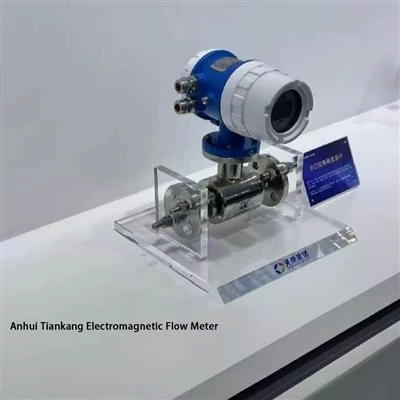
If you’re not sure which protocol is right for your flow instruments, or you’re looking to upgrade your setup, reach out to us to chat through your needs. We can help you pick the right device and communication protocol to fit your system, no confusing jargon, no hidden fees.
Electrical Equipment References:
- Industrial Communication Protocols: A Practical Guide, ISA, 2022.
- Fieldbus and Industrial Network Standards, IEC, 2021.
- WirelessHART Implementation Guide, HART Communication Foundation, 2020.
- Modbus Protocol Specification, Modbus Organization, 2019.
Anhui Tiankang Group Co., Ltd.
As one of the most professional flow instruments manufacturers and suppliers in China, we’re featured by quality products and good service. Please feel free to wholesale bulk customized flow instruments made in China here from our factory. Welcome to contact us for pricelist.
Address: No. 20, South Renhe Road, Tianchang City, Anhui Province, People’s Republic of China
E-mail: tiankanggroup006@163.com
WebSite: https://www.tkanggroup.com/
