If you’ve ever ordered fiber optic cables for data centers, high-density network setups, or 5G backhaul projects, you’ve probably seen the terms “simplex MPO/MTP adapter cables” and “duplex MPO/MTP adapter cables” thrown around. As someone who’s been supplying these cables for over seven years, I can’t count how many times I’ve gotten calls from network engineers or procurement teams who mix the two up, order the wrong type, and end up scrambling to fix a configuration that doesn’t work. It’s a small, easy mistake to make, but getting the difference right can save you hours of downtime, extra costs, and headaches down the line. Let’s break this down plainly, no jargon overload, just the real-world stuff I’ve seen play out in hundreds of deployments. MPO/MTP Adapter Cable

First, let’s start with the basics: what even is an MPO or MTP adapter cable? For anyone new to the space, MPO (Multi-fiber Push-On) is the standard connector used for high-density fiber connections—think 12 fibers, 24 fibers, even 72 all packed into one small connector. MTP is just a brand name variant of MPO connectors that’s more tightly toleranced, so it’s often preferred for mission-critical networks like data centers, but they work the same way in terms of adapter cable design. The adapter cable itself is the assembly that connects two MPO/MTP connectors, with a sleeve or adapter in between to hold them aligned, so all the fibers line up correctly instead of crossing or misconnecting.
Now, the core difference between simplex and duplex comes down to how many fiber pairs they carry, and what those pairs are meant to do. Let’s start with simplex MPO/MTP adapter cables. A simplex adapter cable, at its most simple, carries only one bidirectional fiber path. Wait, bidirectional means it uses a pair of fibers, right? One to send data, one to receive it. So when I say simplex here, I’m talking about the number of independent fiber channels the cable supports, not the total number of individual fibers. Let me make that concrete. A standard simplex MPO cable might have 12 fibers total, but arranged into one single bidirectional lane. That means if you need to connect a transmitter to a receiver, the cable will map fiber 1 to fiber 7 for transmit, fiber 2 to fiber 8 for receive, and the rest of the 10 fibers in that 12-pack are either unused or reserved for future expansion. Why would someone use that? Simplex cables are designed for single-direction, point-to-point connections where you only need one active bidirectional link. Most often, these are used in long-haul links, broadcast systems, or legacy network setups that only require one dedicated pair of fibers for a specific link. For example, if a security team is setting up a remote camera at the edge of a campus and only needs to stream video back to the main control room, a simplex MPO cable is perfect—you don’t need extra pairs you’ll never use, so it’s more compact and cost-effective than using a duplex cable for that single link.
Then there’s duplex MPO/MTP adapter cables. A duplex cable carries two independent bidirectional fiber channels. That means it has two separate lanes, each with its own transmit and receive pair. A standard duplex MPO cable is still often a 12-fiber or 24-fiber cable, but split into two distinct simplex lanes. So lane one is fibers 1 and 7 (transmit/receive) for link one, and lane two is fibers 2 and 8 (transmit/receive) for link two, or another pair of fibers designated for a second separate connection. Wait, sometimes people confuse duplex MPO with duplex LC connectors, which are two separate LC connectors side by side, and that’s a fair mix-up for someone new. Duplex MPO isn’t just two simplex cables stuck together; it’s a single adapter cable that can carry two full, independent fiber links in the same outer jacket. That’s a huge win for high-density setups, like a server rack in a data center. If a technician needs to connect a switch to a storage array, they might need two separate links: one for regular data transfer and a secondary link for backup or failover. A duplex MPO adapter cable lets them run two connections in one slim cable, instead of two separate simplex cables cluttering up the rack. I’ve seen this make a massive difference in dense 48U data centers where every inch of cable space matters—duplex cables cut the number of runs you need by half, reduce cable management clutter, and make it way easier to trace links when you’re troubleshooting.
Let’s get into the practical use cases, because that’s where the rubber meets the road. Simplex MPO cables are the go-to for any scenario where you only need one active link. That includes things like long-haul telecommunications links, where the cost of extra fibers is a concern (since each additional fiber adds to the cable’s size and cost), point-to-point connections for industrial sensors, or legacy networks that haven’t been upgraded to support multiple parallel links. They’re also often used in test and measurement setups, where you’re only testing one signal path at a time—simplex cables are simpler to terminate, require less precision during installation, and are cheaper for small-scale deployments. I once worked with a team that was setting up a new rural cell tower; they only needed a single link back to the core network, so a simplex MPO cable cut their cable costs by 30% compared to using a duplex cable, and it was easy to install by a two-person crew without specialized tools.
Duplex MPO cables, on the other hand, are made for scenarios where redundancy, parallel data transfer, or multiple independent links are non-negotiable. The biggest one here is data center top-of-rack (ToR) switches, where many networks use 40G or 100G fiber links that require two simplex pairs: one for transmit and one for receive. Wait, that’s right—100GBASE-SR4 transceivers use four fibers total, so a duplex MPO cable (which has two pairs of two fibers each, for a total of four) is exactly what you need. No wonder duplex cables are the standard for modern high-speed data centers; they let you run multiple high-speed links in a single assembly, which is critical for scaling up network capacity without running out of rack or cable tray space. Another big use case is redundant links: if you have two connections between two network devices, one for primary data and one for failover, a duplex cable lets you connect both with one cable run, reducing the number of connectors and splices you have to manage. I had a client a couple years back who was upgrading their e-commerce platform’s data center, and they were running 200 duplex MPO cables between the ToR switches and the storage area network (SAN). That cut their cable count from 400 simplex cables to 200, which meant they didn’t have to add extra cable trays, and installation time was reduced by almost 40% because the technicians only had to run half as many cables. There’s also duplex MTP-specific adapters, which use the tighter MTP connectors for even more precision, common in 5G fronthaul and midhaul networks where latency and reliability are top priorities.
Now, let’s clear up a common myth a lot of people have: more fibers don’t always mean duplex. A lot of folks assume that any MPO cable with 24 fibers is duplex, but that’s not true. A 24-fiber simplex MPO cable is still just one single bidirectional lane, using fibers 1-12 as one pair and 13-24 as another? Wait, no, let’s get that alignment right to avoid confusion. The key is the pinout, not the total fiber count. For simplex MPO, the standard pinout is that one pair is mapped to two fibers in the MPO connector: for a 12-fiber MPO, that’s position 1 (transmit) and position 7 (receive), with the other 10 fibers reserved or unused. For duplex MPO, the pinout splits two separate pairs: first pair is positions 1 and 7, second pair is positions 2 and 8, so you have two independent bidirectional lanes in the same cable. A 24-fiber cable can be either: 24-fiber simplex uses positions 1/7, 2/8, 3/9, etc., all as part of one single lane, while 24-fiber duplex uses two separate 12-fiber lanes, each with their own pairs. That’s a critical distinction because if you misinterpret the pinout, you’ll have a cable that doesn’t work, even if you ordered the right labeled type. I’ve heard too many horror stories where a network engineer ordered a 24-fiber simplex cable thinking it was duplex, hooked it up, and had no data transfer because the pairs weren’t aligned correctly for two links. That’s why it’s not just the label, it’s the pinout that defines simplex vs duplex.
Another difference is installation and maintenance. Simplex MPO adapter cables are simpler to handle, lighter, and easier to route through tight spaces, which is why they’re preferred for long runs and outdoor deployments. They also require fewer adapters, so there’s less room for signal loss from bad connections. Duplex cables are bulkier, but they simplify maintenance for high-density setups because you can trace two links at once without having to find separate runs. When troubleshooting, if you have a duplex cable with two links, you can test both at the same time, instead of running two separate tests on two simplex cables. That saves time when you’re dealing with network outages that can cost businesses thousands of dollars per hour. There’s also a cost difference, though it’s not as big as you might think. Simplex cables are cheaper per meter, but if you need two links, you might end up spending more on two simplex cables than one duplex cable for the same total run length. That’s why it’s important to calculate total cost of ownership, not just per-cable price. For example, if you need two 10-meter runs, two simplex 10-meter cables might cost $120 total, while one duplex 10-meter cable might cost $80, plus you save on installation time and reduce clutter, so the duplex is a better deal in that case.
Wait, let’s also touch on MTP-specific vs standard MPO adapters in both types, because that’s another layer people miss. Duplex MTP adapter cables are often specified for high-speed applications, like 400G Ethernet, where alignment precision is critical to avoid signal loss. The MTP connector’s tighter tolerance means it has a more accurate pinout, so duplex MTP cables are more reliable for high-speed links than standard duplex MPO cables. Simplex MTP cables are less common, but they’re used in specialized test equipment or legacy MTP setups where only one link is needed. Most of the time, when you see simplex or duplex MPO/MTP adapters, the MTP variant is just a premium version of the same type, with better performance for demanding use cases.
Let me share a real example that shows how this plays out in the field. Last year, a customer reached out to me panicking because they had installed a new 10G network in their corporate office, but they only had one run of cable from the server closet to the reception area. They ordered a duplex MPO adapter cable, hooked it up, and had perfect data transfer. A few months later, they needed to add a second link for a security system, and they didn’t want to run another cable through the ceiling. They ended up using the same duplex cable, splitting the second lane to connect the security system, and it worked flawlessly. If they had used a simplex cable for the first run, they would have had to run a second cable, which would have cost them an extra $500 in installation fees and caused a week of downtime while the cable was pulled. That’s the kind of practical difference that comes down to choosing the right type for your use case.
Now, what are common mistakes to avoid? First, don’t assume that a higher fiber count means duplex. A 24-fiber cable can be simplex, a 12-fiber can be duplex—you have to check the pinout. Second, don’t mix simplex and duplex for the same application. If you need redundancy, a duplex cable is better than two simplex cables, but if you only need one link, a simplex cable is unnecessary overkill. Third, make sure your transceivers match the cable type. A 100G transceiver that needs four fibers will not work with a simplex MPO cable, which only has one pair of fibers, no matter how many total fibers are in the cable. That’s a mistake I see all the time—someone buys a cheap simplex cable thinking it’s a duplex, and it doesn’t work with their high-speed transceiver, leading to wasted time and money.
As someone who’s worked with MPO/MTP adapter cables for years, I can tell you that choosing the right type isn’t just a technical detail—it’s a decision that impacts your network’s performance, cost, and ease of maintenance. Simplex cables are simple, cost-effective, and perfect for single-link deployments, while duplex cables offer the redundancy and density needed for modern data centers, high-speed networks, and setups where multiple links are required.
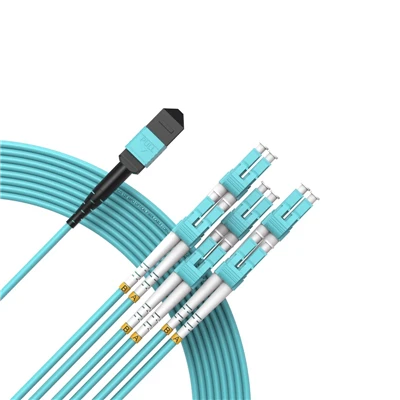
If you’re not sure which type is right for your next project, or you need reliable MPO/MTP adapter cables that meet industry standards and are built to last, don’t hesitate to reach out. We work with network engineers, data center managers, and telecom teams across all industries to provide custom solutions, same-day shipping for urgent orders, and technical support to make sure you get exactly what you need. Whether you’re building a small office network or a large-scale data center deployment, we can help you find the right simplex or duplex MPO/MTP adapter cable at a price that fits your budget.
Fiber Pigtail References
- Fiber Optic Association. (2022). MPO/MTP Connector and Adapter Installation Guide.
- Telecommunications Industry Association. (2021). TIA-568-C.3 Standard for Optical Fiber Cabling.
- Data Center Dynamics. (2023). High-Density Cabling Best Practices for Modern Data Centers.
Shenzhen Dimi Telecommunications Co., Ltd.
As one of the most professional MPO/MTP adapter cable manufacturers and suppliers in China, our products have good reputation in the market. Please rest assured to wholesale advanced MPO/MTP adapter cable made in China here from our factory. Also, custom service is available.
Address: China
E-mail: sales@dimifiber.com
WebSite: https://www.dimi-fiber.com/
